The Ford Explorer is a family SUV first, and its windshield shows it. The glass is tall, broad, and upright, with a wide span that a small sedan shade could never cover. A good Explorer shade has to do two jobs at once: cover that large glass edge to edge without sagging in the middle, and fit cleanly around the hardware mounted high on the windshield, behind or near the rear-view mirror. Many shades fail one of those tests, and on a car this size the failure is obvious: a sagging middle, exposed lower corners, or a mirror cutout that presses against a housing.
Explorer owners also use their cars differently from sedan owners. The car spends parked time at schools, sports fields, trailheads, offices, airports, and summer attractions, often with luggage, sports gear, strollers, or groceries already in the cargo area. A shade that is bulky to store, awkward to deploy while unloading children and gear, or uncertain around the mirror will often be skipped. That is the real buying test for an Explorer: will this shade be used on a busy family day, not just on a quiet weekend.
Confirm your model year before ordering
Do not order an Explorer shade by model name alone. The KALDOV Explorer product page does not list a year range. It requires Year, Make & Model, and it says: “Please confirm the model year and compatibility before purchasing.”
That wording is the fitment basis for this guide. Do not assume one pattern covers every Explorer, and do not treat a shade made for another Ford SUV as an Explorer shade. Send your model year, and your trim if asked, through the seller’s Custom Fit Program. KALDOV uses that information to match the best-fitting product for your vehicle, rather than matching by model name alone.
If your Explorer sits near a changeover year, confirm from the vehicle information or a photo of the car, not the registration year alone. Windshield shape, mirror housing, and mounted equipment can vary by year and trim, and on a windshield this broad, a small difference at the top of the glass can leave a large exposed patch.
Have these details ready before you order: model year, trim if requested, anything mounted near the rear-view mirror such as a dash camera or toll transponder, and whether you want a removable shade or an installed design. A seller who asks only for a generic SUV size, without year or compatibility, is not giving you a custom fit.
Check the mirror and camera area
Many modern Explorers carry driver-assistance hardware high on the windshield, behind or near the rear-view mirror. A suitable shade should clear that housing without being wedged behind the mirror, forced against it, or bent hard during installation. If you have to bend the shade to make it sit, the pattern is probably wrong.
From the driver’s seat, check how wide the mirror and camera housing is, whether a rain sensor or other equipment sits nearby, whether a dash camera hangs below the mirror, and how much room there is between the housing and the top of the windshield. A proper custom-fit design accounts for that space, with a cutout that clears the housing cleanly. Forcing a shade behind the mirror may leave it crooked, with one side exposed and the other pressing on equipment it should not touch.
An opaque shade blocks the view through the windshield while deployed, including any forward-facing camera view. That is normal for a parked shade, and it is why every shade in this guide must be fully retracted before driving. Never drive with a shade partly covering the windshield.
Why universal shades struggle in an Explorer
Width and height together make a shade fit, not width alone. The Explorer’s upright windshield, corners, rake, mirror area, and pillar angles determine whether a shade stays flat and covers the glass.
Common universal-shade problems on a large SUV include sagging in the middle across the broad span, lower-corner gaps that let sunlight reach the dashboard, dependence on the sun visors to hold the shade in position, a generic mirror cutout that is too small, too large, or misplaced, and bulky storage in a cargo area already used for sports gear, groceries, strollers, or luggage.
A shade that sags or slips on a windshield this size does not just look untidy. It leaves the dashboard and front seats exposed where heat builds fastest, and it teaches the owner to stop using it. The test is therefore stricter than “does it roughly cover the glass.” The test is: does it cover this windshield edge to edge, clear this mirror housing, stay flat across the full span without visor tricks, and store without taking over the cargo area.
Folding, roll-up, and electric options
A well-patterned folding shade is the lower-cost option and can work well for occasional use. On an Explorer-sized windshield, however, a folding shade is large, bulky to handle, and harder to store than on a sedan. A roll-up shade may pack more neatly, yet it can curl or fail to sit flat when the pattern is wrong for this windshield. Choose folding if upfront cost matters most and you do not mind handling and storing a large shade after every trip.
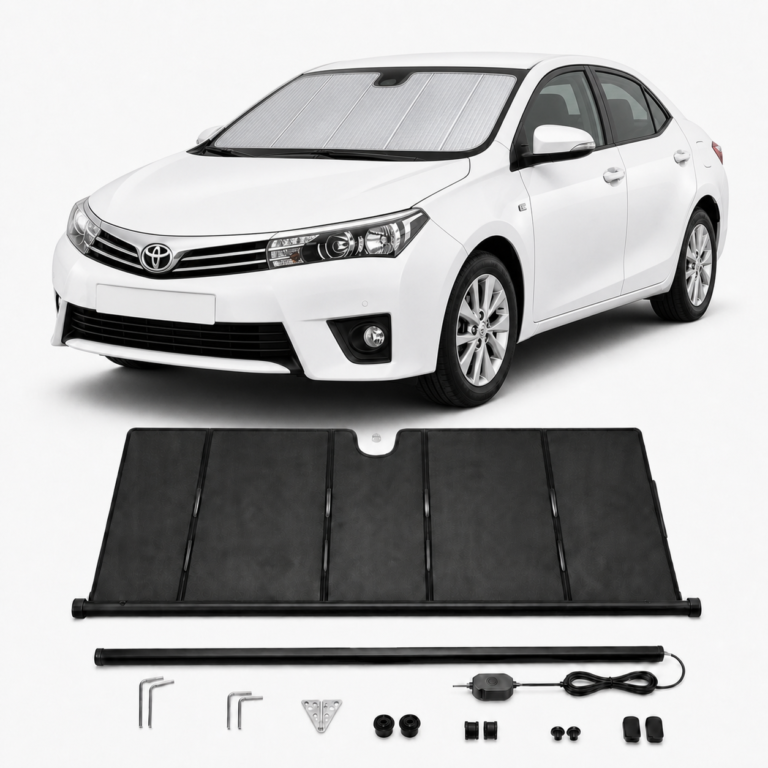
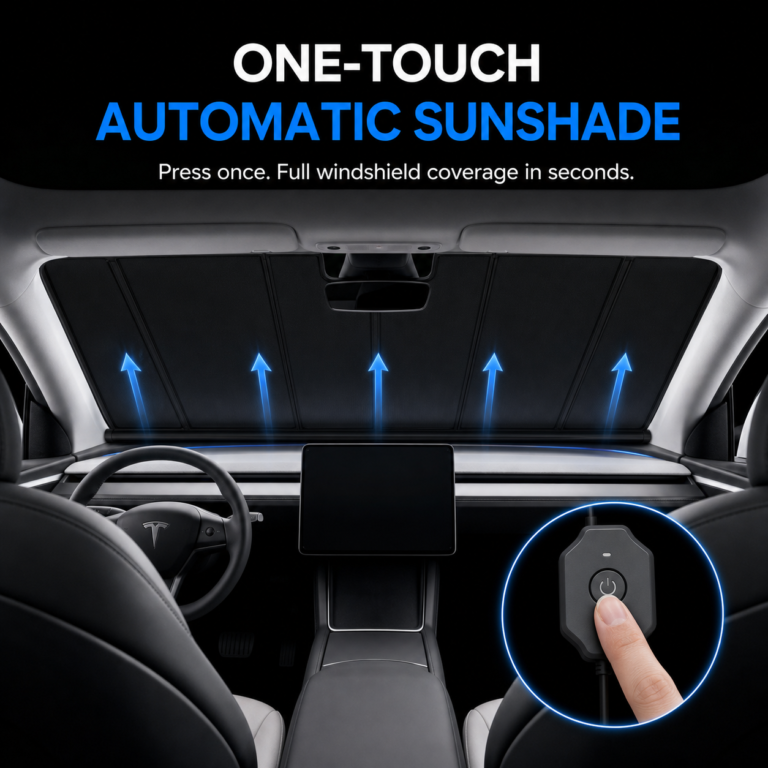
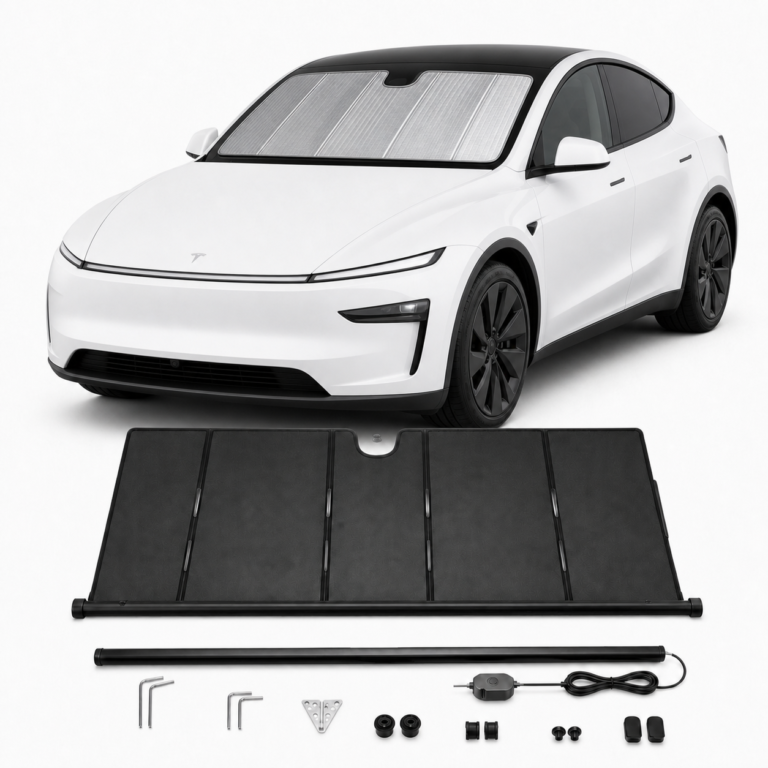
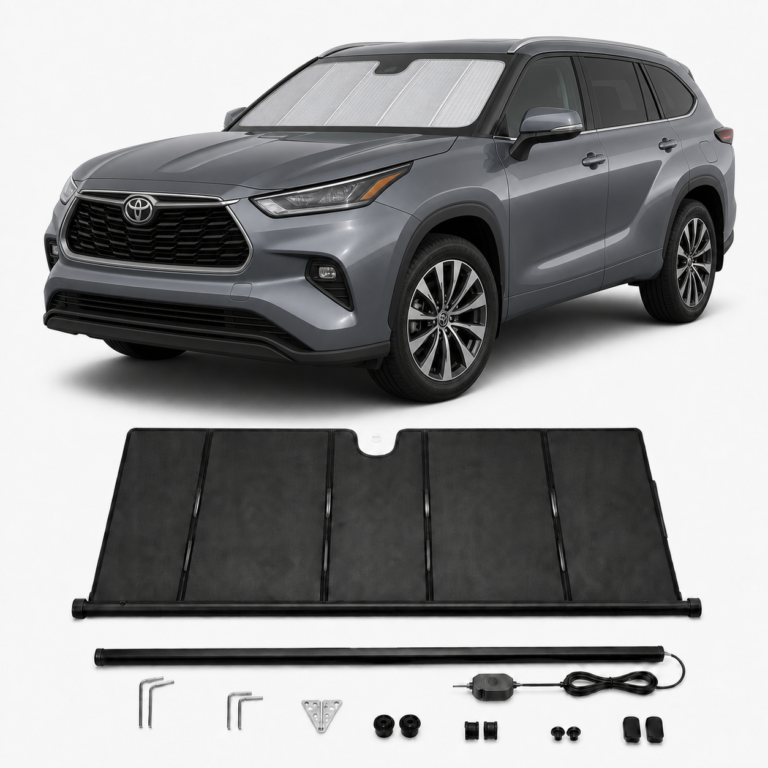
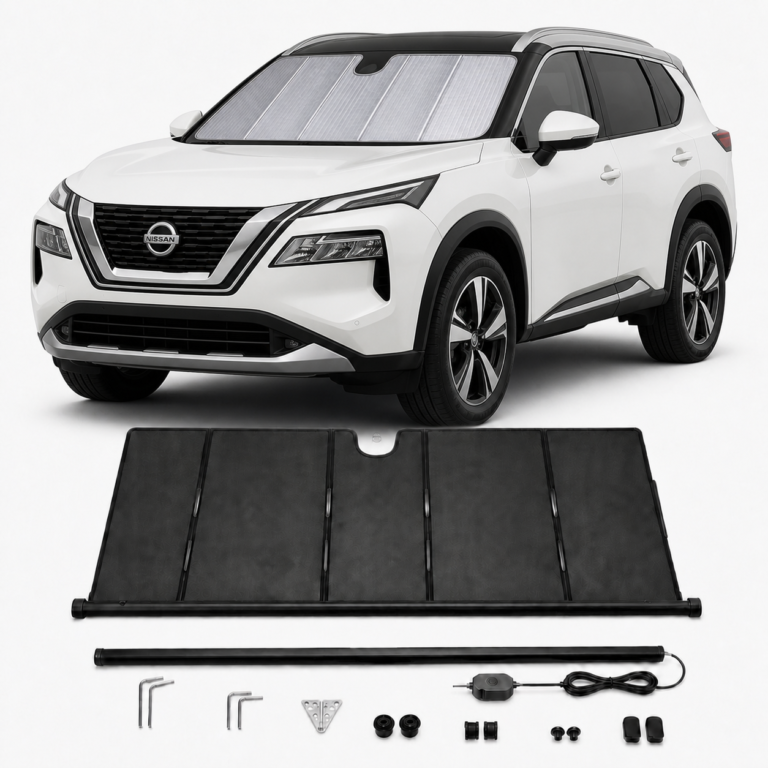
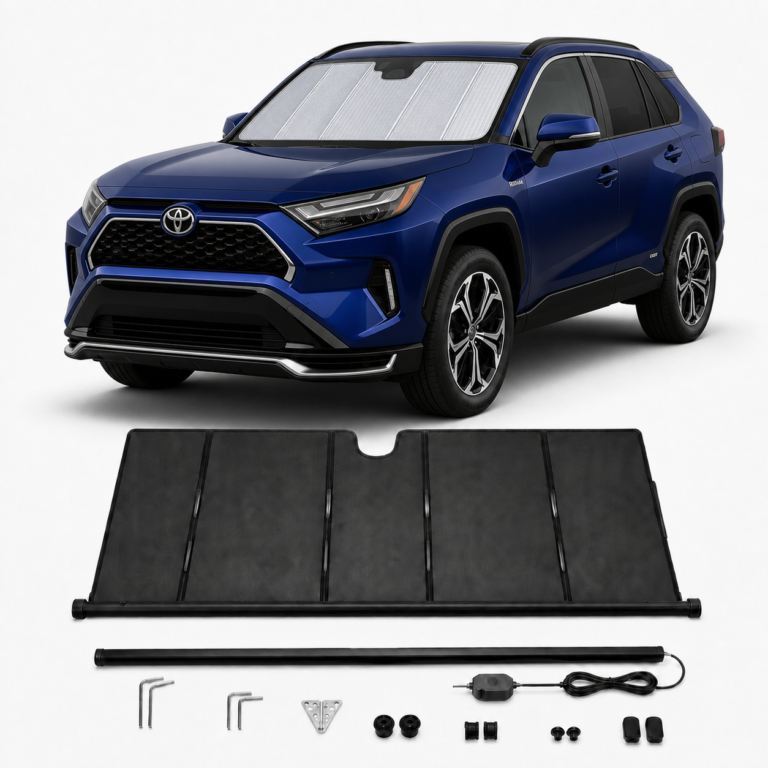
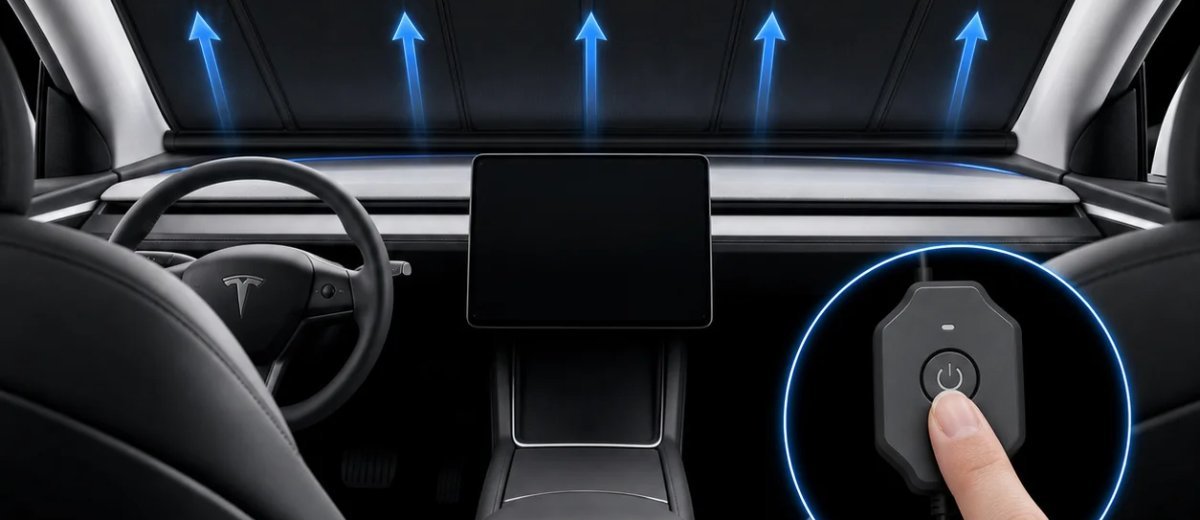
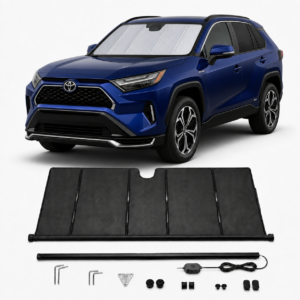
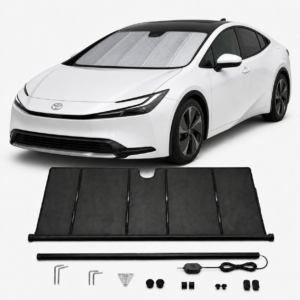
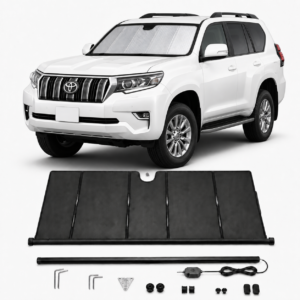
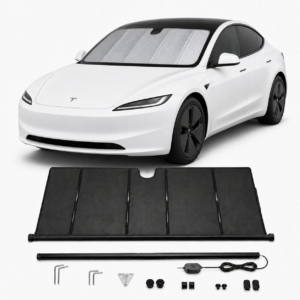
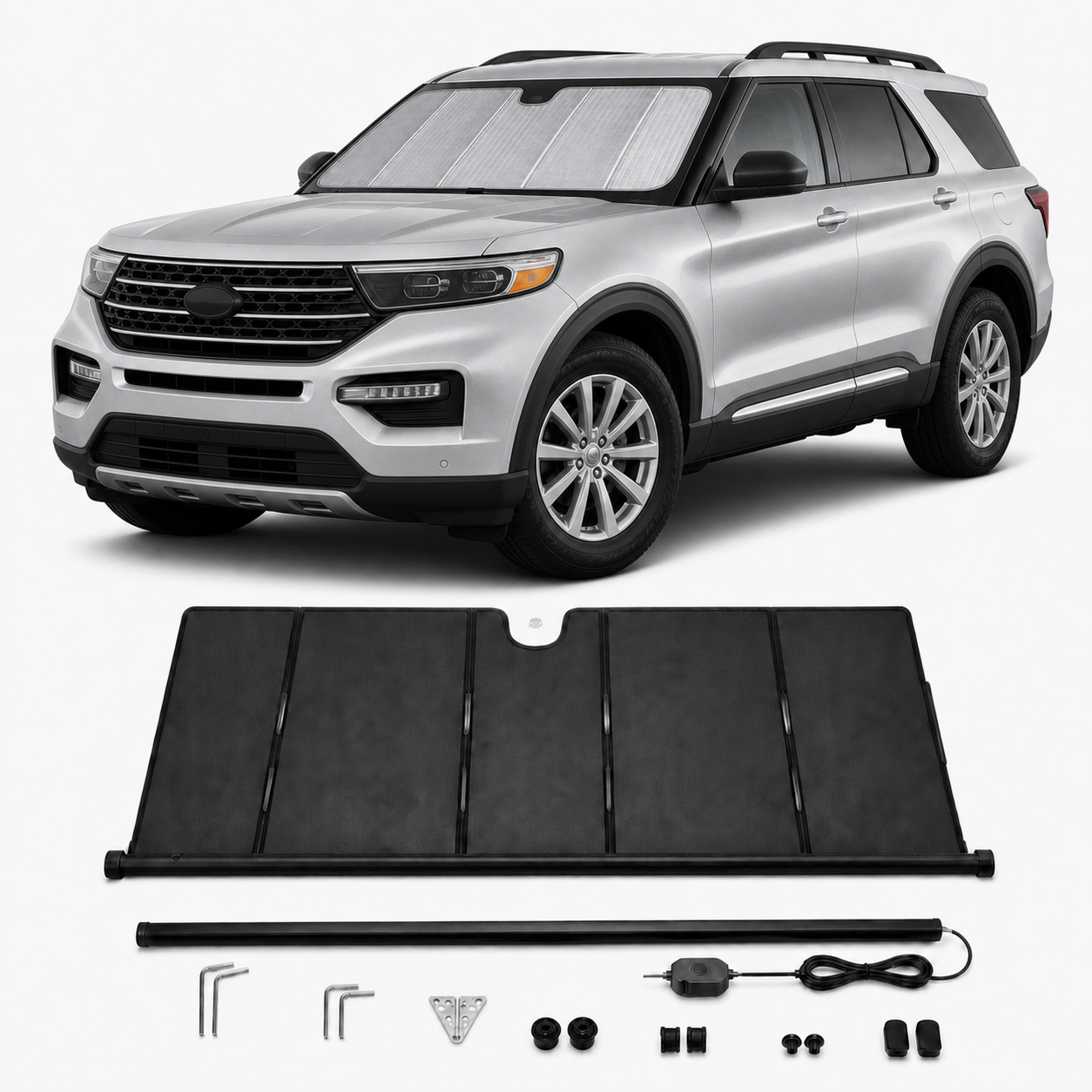
An installed electric shade stays on the windshield and is opened or closed with a control, so it avoids the folding and storage routine entirely. The mechanism, as shown in KALDOV’s installation video, is a slim black bar that sits at the bottom of the windshield. Power comes through a single OBD plug, with the cable hidden along the trim. Press the button at the end of the bar and the flat shade rises out of the bar to cover the windshield; press again and it retracts back into the bar. It is not a top-mounted shade, it is not a pleated shade, and there is no dashboard button or centre-screen shade menu.
The tradeoffs are higher price, a more involved first installation, and the need to confirm power, switching, and mirror clearance. For a family Explorer, the main value is consistency: a shade that is always there, and opens with one press while you are unloading gear, is a shade that gets used.
For either type, fitment should be a specific answer. If a seller cannot say which model year a product fits, or cannot explain how it clears the mirror housing, keep looking.
What to check before ordering
Have these details ready, in this order:
- Model year and compatibility, confirmed as the product page requires.
- Trim, if requested.
- A photo or description of the mirror and camera area if fitment is uncertain.
- Any dash camera, toll transponder, or other windshield-mounted accessory.
- Whether you prefer a removable folding shade or an installed electric design.
A good shade can make a noticeable difference to steering wheel and dash temperatures, but it does not cool the entire cabin on its own. Never leave children or pets in a parked vehicle, even with a sunshade installed.
A custom-fit electric option for Explorer
KALDOV makes custom-fit electric windshield sunshades for specific models and years. Its Explorer option is motorized and one-touch, with a quiet 12W motor, an aluminum frame, and power through the car’s OBD port for compatible 12V-16V systems. Length options are 48.8, 50.4, 51.6, 53.0, and 54.7 inches, with a 1.18-inch profile and a 1.38-inch body. Installation takes about five minutes with no tools and no drilling.
View the fitment details here: Ford Explorer electric windshield sunshade. It costs $328 with free shipping. Delivery takes 7-15 days, and the motor and mechanism carry a 1-year warranty. Through the Custom Fit Program, owners can send the year, make, model, and trim and receive a reply within 2 business days.
FAQ
Does an Explorer shade fit another Ford SUV?
Do not assume so. Buy only when the listing names Explorer and your model year, or the seller confirms it in writing. A shade patterned for a different Ford model may look similar online but fit poorly around the mirror housing and A-pillars.
How do I check mirror and camera clearance?
Compare the housing behind the mirror with the shade’s cutout. It should clear the housing without pressure or hard bending. Tell the seller about nearby sensors and accessories, and send a photo of the mirror area if anything is uncertain.
Why does my universal shade keep sagging?
The Explorer windshield is broad and upright, so a light generic shade may not hold its shape across the span. A model-specific pattern with better edge fit and support usually sits flatter, without relying on the visors.
Is an electric shade worth it for a family SUV?
It can be if a bulky folding shade tends to be skipped because handling and storing it on family days is awkward. An installed shade stays in place and opens with one press, so daily and road-trip use is much easier to keep up.
What details should I send before ordering?
Send the model year, trim if requested, and a note or photo of the mirror and camera area if anything aftermarket is mounted there. That is the information the Custom Fit Program uses to match the product to your car.