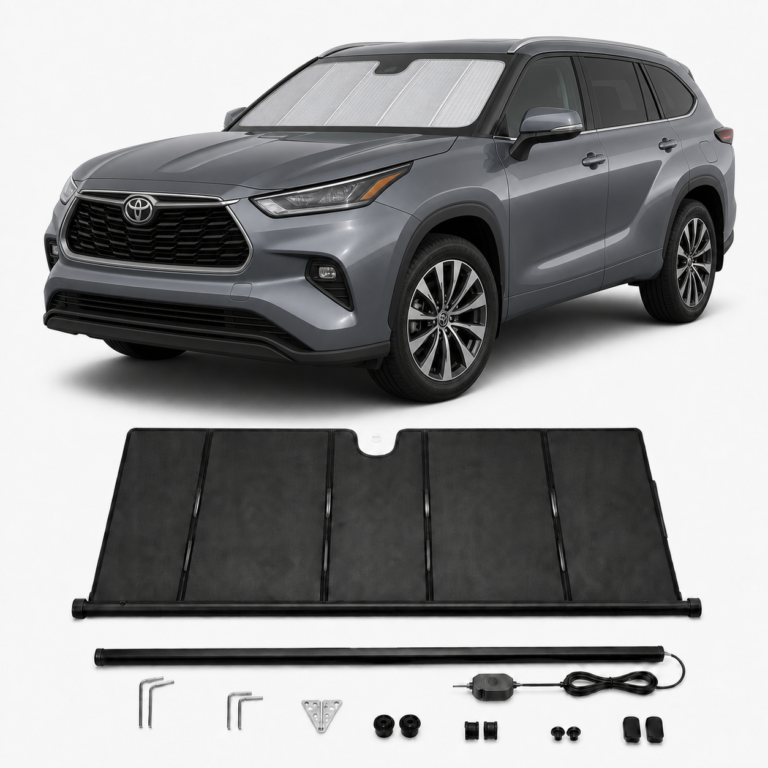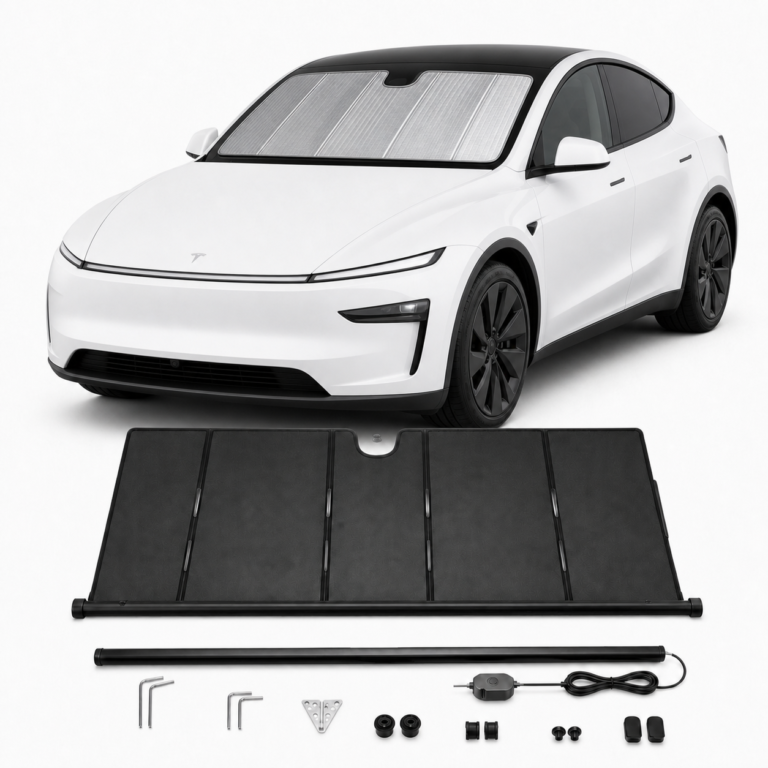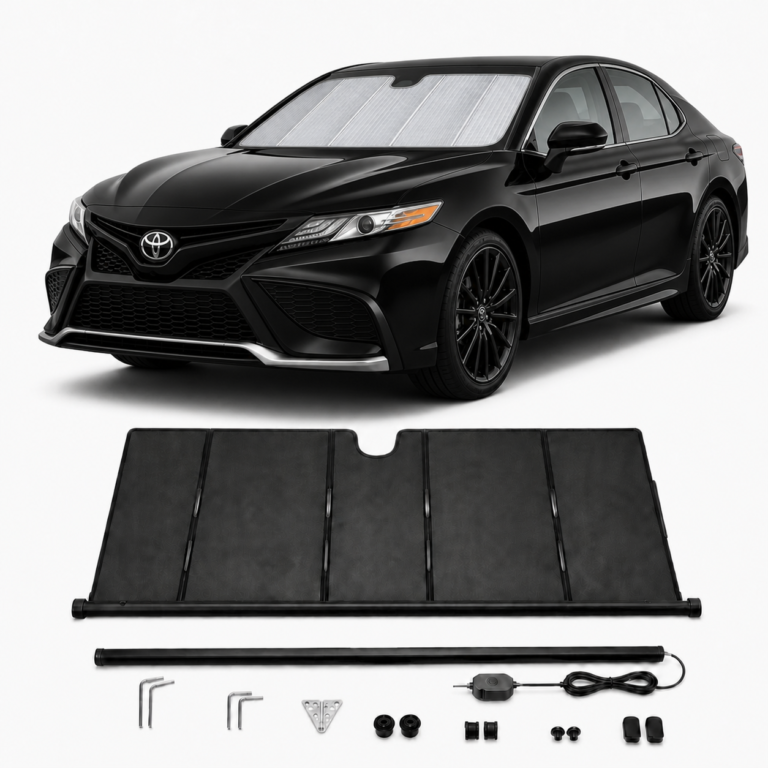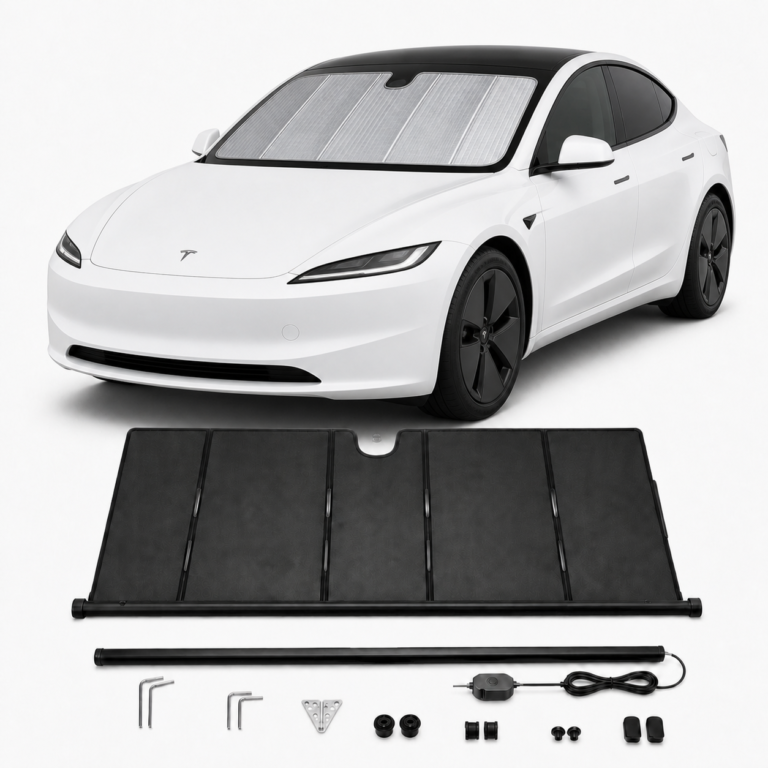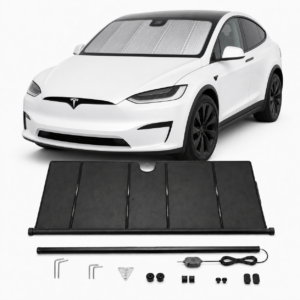
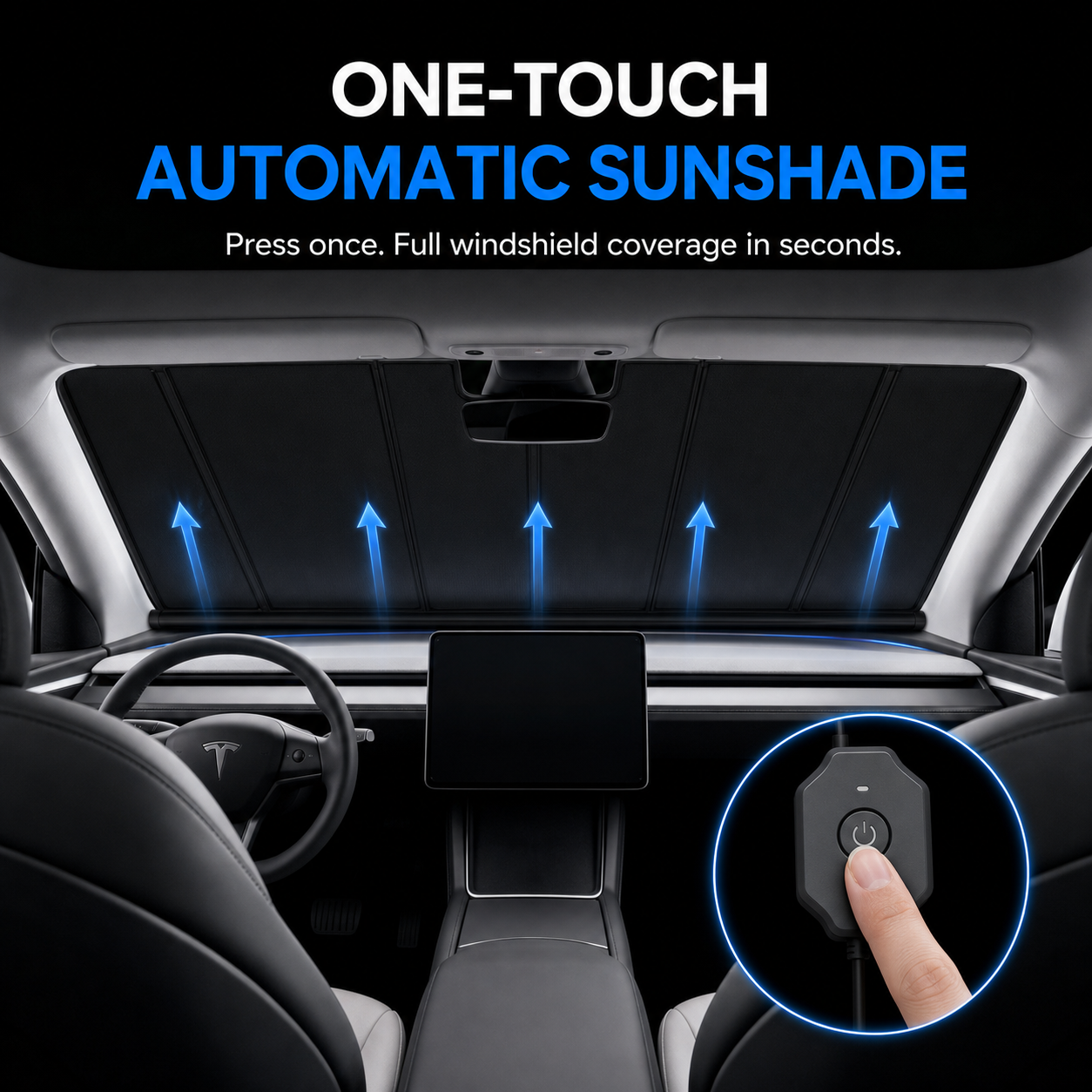
Short answer: An electric windshield sunshade blocks heat about as well as a good custom-fit manual shade. You’re paying for convenience: it deploys at the push of a button, never needs folding or storing, and fits your windshield exactly. If you park in the sun every day and hate wrestling with a folding shade, it’s worth it. If you only need one occasionally, a $60–$95 manual shade is the better buy.
What is an electric windshield sunshade?
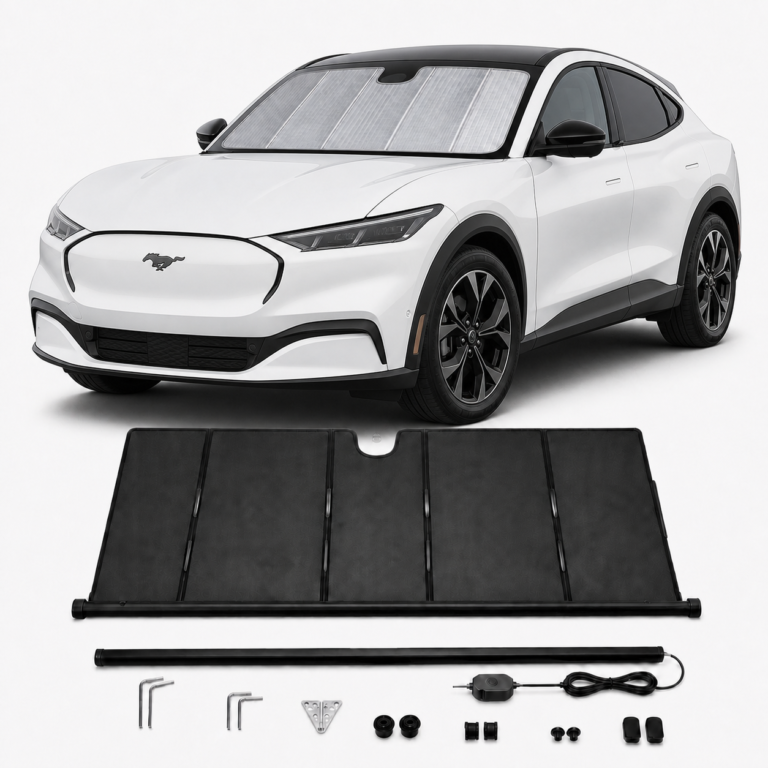
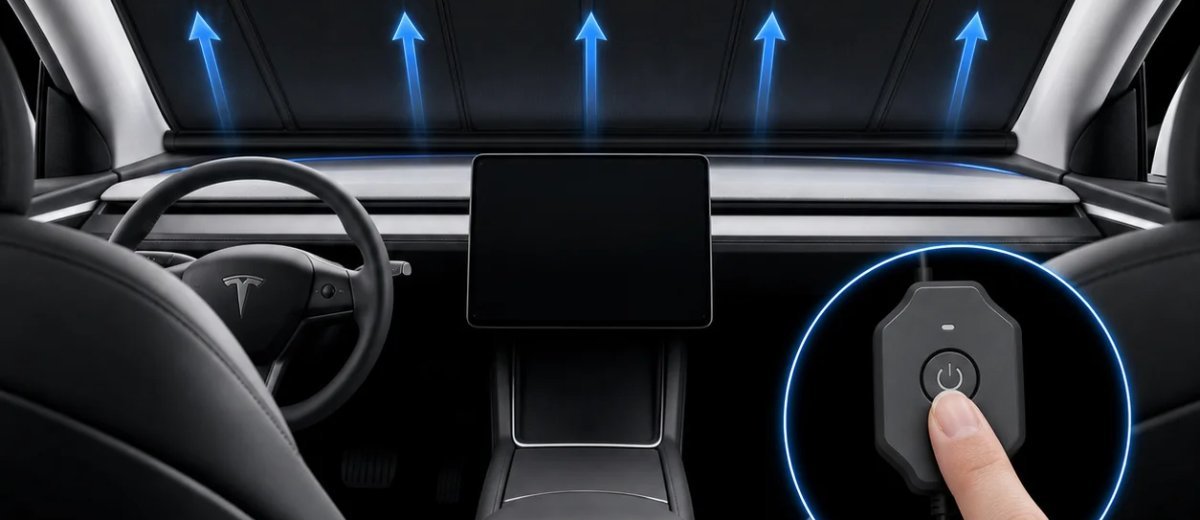
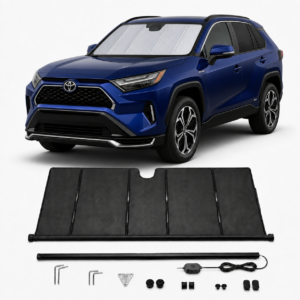
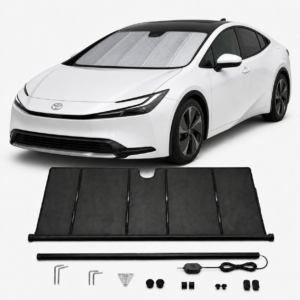
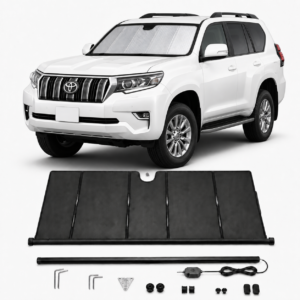
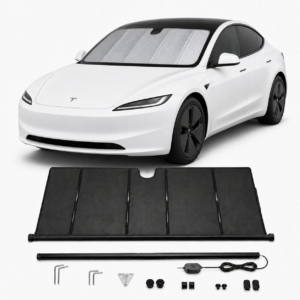
An electric (also called automatic, motorized, or retractable) windshield sunshade is a reflective shade built into a slim rail that sits along the bottom of your windshield. A small motor raises it to cover the glass when you park and lowers it back into the rail before you drive.
Most kits on the market share the same basic layout:
- Rail and frame: a low-profile aluminum housing along the base of the windshield. On KALDOV kits it’s 1.18 in tall and 1.38 in deep, available in five lengths (48.8–54.7 in) to match different windshields.
- Motor: a small DC motor. KALDOV uses a 12W quiet motor.
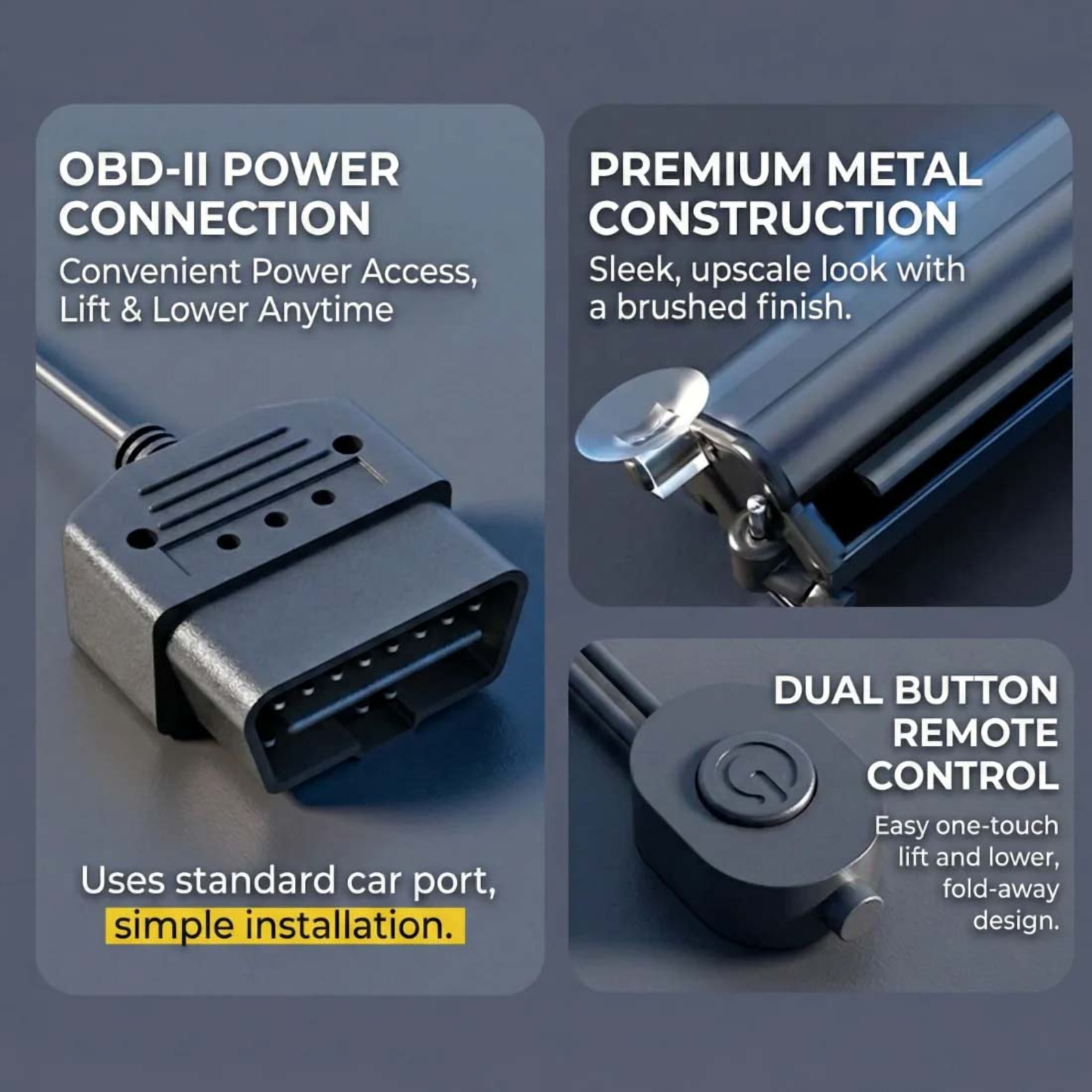
- Power: usually taken from the car’s OBD port, so you don’t have to cut into any wiring. KALDOV kits run on 12–16V vehicle systems.
- Controls: a button or remote with separate open and retract buttons, plus an independent power switch.
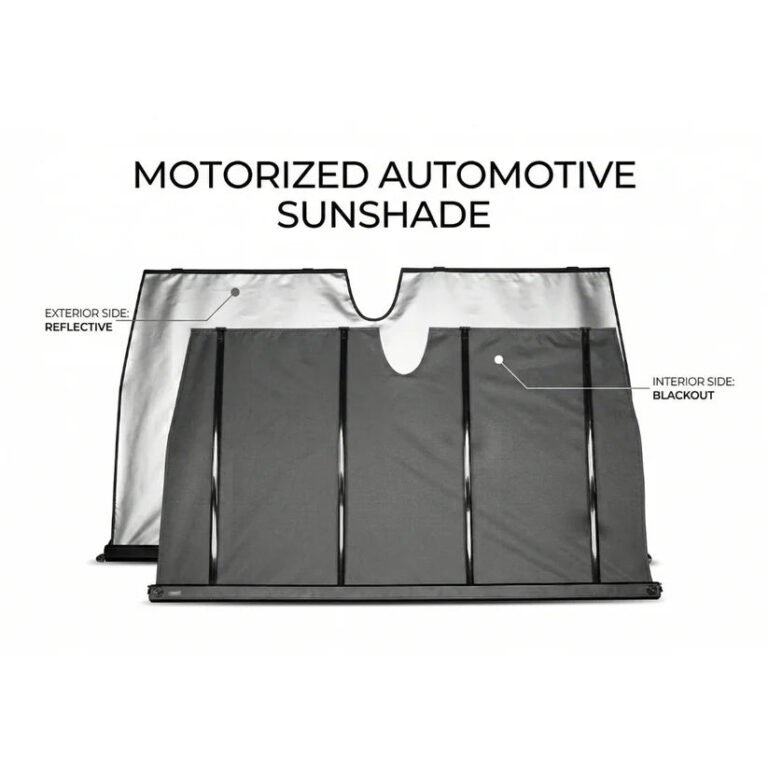
- Shade fabric: a reflective outer face that bounces sunlight back out, and a darker inner face.
Do electric sunshades keep a car cooler than manual ones?
Not by much, and anyone who says otherwise is overselling. Heat protection comes from how much glass the shade covers and how reflective it is, not from the motor. A well-fitted manual shade and a well-fitted electric shade made of similar material will perform about the same.
What independent tests show about windshield shades in general:
- In a 2021 test by Germany’s auto club ADAC, an unprotected car’s cabin reached 60°C (140°F) after 90 minutes in the sun. An interior accordion-style shade lowered cabin air only about 4°C (7°F), but cut the steering wheel’s surface temperature by up to 26°C (47°F). (Carscoops report on the ADAC test)
- An Arizona State University / UC San Diego study found that after one hour in the sun, dashboards reached 157°F and steering wheels 127°F. (Vanos et al., Temperature, 2018)
So any windshield shade’s real job is to keep the surfaces you touch (wheel, seats, dash, screen) from getting scorching, and to slow UV damage to the dashboard. It won’t turn your car into a cool room. We cover the data in detail in Do Windshield Sunshades Actually Work?
Electric vs. manual vs. custom-fit: side-by-side
| Universal folding shade | Custom-fit manual shade | Electric (motorized) shade | |
|---|---|---|---|
| Typical price | $15–$40 | $60–$95 (e.g. WeatherTech, Covercraft) | ~$200–$300 for windshield kits |
| Fit / coverage | Gaps at edges and around the mirror | Close to full coverage | Full width, model-specific |
| Time to deploy | 30–60 s, two hands | 20–40 s, needs unrolling and visors | One button press, a few seconds |
| Storage | Back seat, door pocket, or floor | Rolled up, takes space | Stays in its rail, nothing to store |
| Install | None | None | One-time DIY install and power hookup |
| Use every day? | People tend to give up | Some do | Designed for it |
| Main downside | Poor fit, wears out | Bulky to store | Price, install, one more electrical part |
Manual shade prices from public retail listings, September 2026. Prices change often.
Where electric sunshades beat folding shades
1. You’ll actually use it
A sunshade only works when it’s up. The most common complaint about folding shades isn’t that they don’t work, it’s that people stop bothering with them: they’re awkward to fold and end up in the back seat. A shade that takes one button press gets used on a 10-minute grocery stop, not just on all-day parking.
2. Exact fit, no gaps
Universal shades leave gaps along the A-pillars and around the mirror and camera housing, where sunlight gets straight onto the dashboard. A vehicle-specific rail sits in the same place every time.
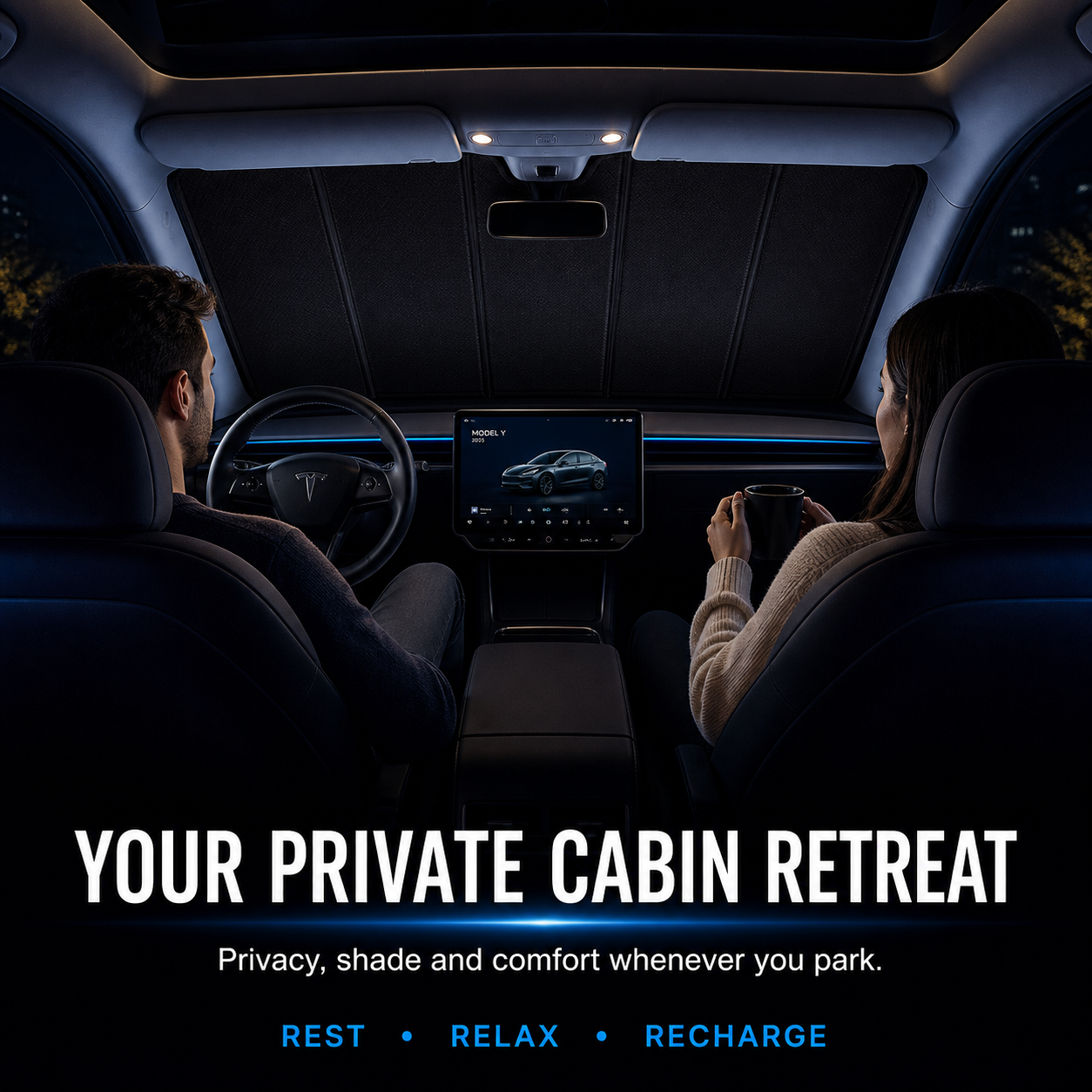
3. Privacy while parked
If you wait in your car, whether charging an EV, napping, or waiting at school pickup, a full-width shade blocks the view in through the windshield.
4. Nothing loose in the cabin
No shade sliding around the floor, no Velcro, no suction cups falling off in the heat.
The honest downsides
- Price. It costs 3–5× a premium manual shade. The extra buys convenience, not extra cooling.
- Installation. Expect a one-time DIY install. On some cars the OBD or diagnostic port is hard to reach, and some Tesla Model 3/Y builds use a diagnostic connector instead of a standard OBD-II port. Confirm your car’s port before you buy.
- It’s an electrical accessory. Ask how it’s powered while the car is off, and use the power switch if you’ll park for weeks.
- Parked use only. The shade must be fully retracted before driving. Many states restrict anything that obstructs the windshield while the car is moving; for example, California Vehicle Code §26708.
- Fit is model-specific. An electric kit made for one car won’t carry over to your next one.
What to check before you buy an electric sunshade
- Exact model and year range. Windshields change between generations (e.g. Model Y “Juniper”, Model 3 “Highland”).
- Rail length and profile. A low profile (around 1.2 in) matters for keeping the dashboard view and any head-up display clear when retracted.
- Power source. OBD plug-in vs. hardwired, voltage range, and whether there’s a hard power switch.
- Clearance for cameras and sensors. Look for a cutout around the mirror and forward-facing camera housing.
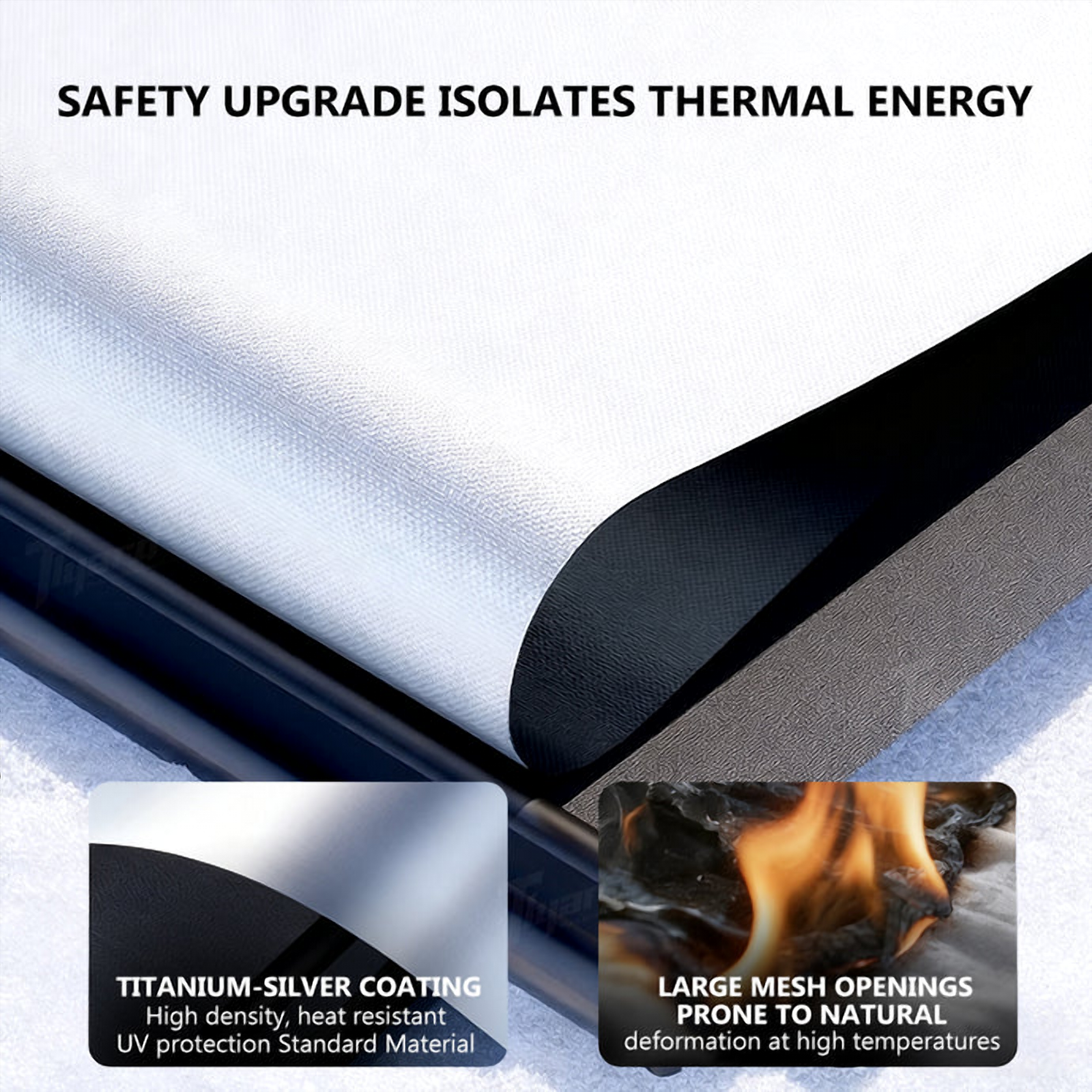
- Fabric. A reflective (silver) outer layer is what bounces heat back out.
- Warranty and returns. Motors and gears are moving parts; know what’s covered.
Who should buy an electric windshield sunshade?
Good fit:
- You park outdoors in strong sun most days (e.g. the Sun Belt: Arizona, Texas, Florida, Southern California).
- You make lots of short stops and never bother with a folding shade.
- You drive an EV and spend time parked in the car while charging.
- You care about protecting the dashboard, screen and leather from UV over years of ownership.
Probably not worth it:
- You park in a garage or covered lot most of the time.
- You plan to sell the car soon.
- You’re happy using a manual shade and actually use it.
KALDOV electric sunshades: models we fit
KALDOV makes vehicle-specific electric windshield sunshades for 28 models, including the Tesla Model Y, Tesla Model 3, Toyota RAV4, Toyota Camry, Corolla and Highlander, Ford Mustang Mach-E, VW ID.4, Kia EV6, Nissan Rogue, and Mercedes-Benz A-, C- and E-Class. Each kit includes the rail, motor, controller and mounting hardware for that model.
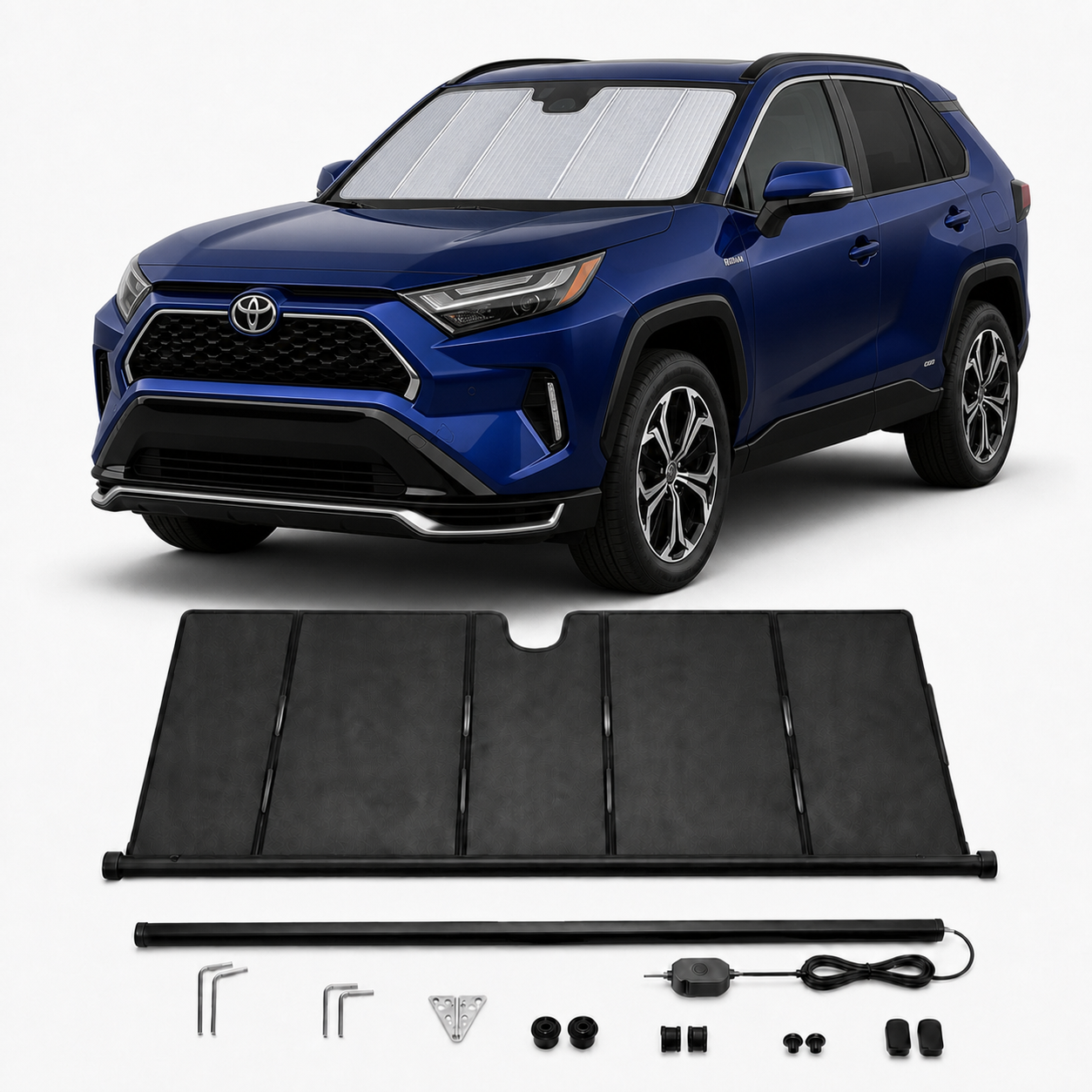
Each product page lists the exact model years it fits. If your car was built near a model-year change, check that range carefully before ordering.
FAQ
Does an electric windshield sunshade drain the car battery?
The 12W motor only draws meaningful power during the few seconds it moves. The thing to check is standby draw from the controller. Use the independent power switch if the car will sit for a long time.
Can I drive with the shade retracted?
Yes. That’s the point of the low-profile rail: retracted, it sits along the base of the windshield. Never deploy it while driving.
Does it work in winter?
A shade can reduce frost on the inside of the glass and keeps the sun off the interior year-round, but its main value is in hot, sunny months.
Is an electric sunshade better than window tint?
They do different jobs. Windshield tint is heavily restricted by law in most states and works while driving; a sunshade blocks much more light but only while parked. Many owners use both.
Will it fit my car?
Only if it’s made for your exact model and year range. Check the product page, or ask us before you order.