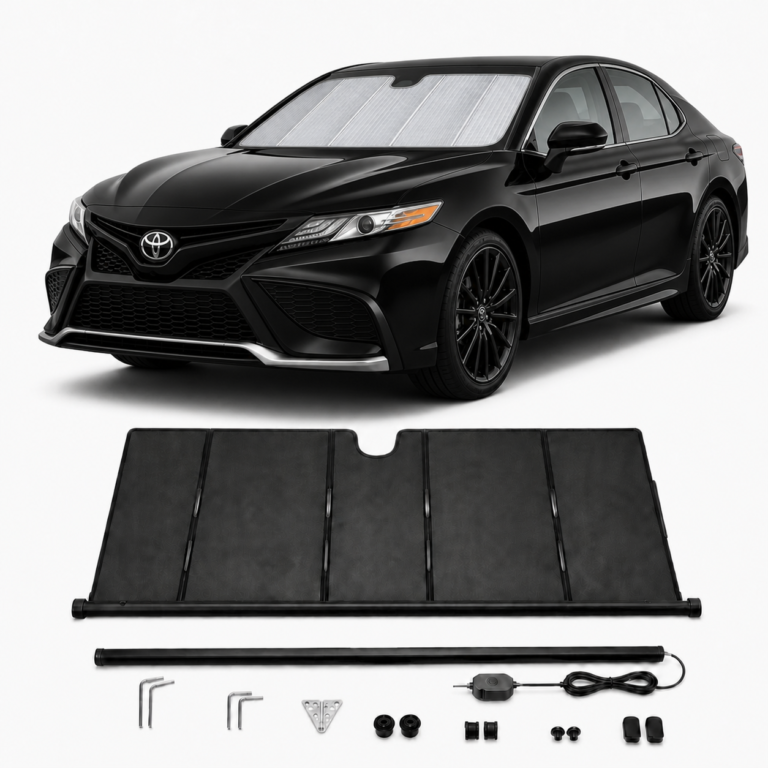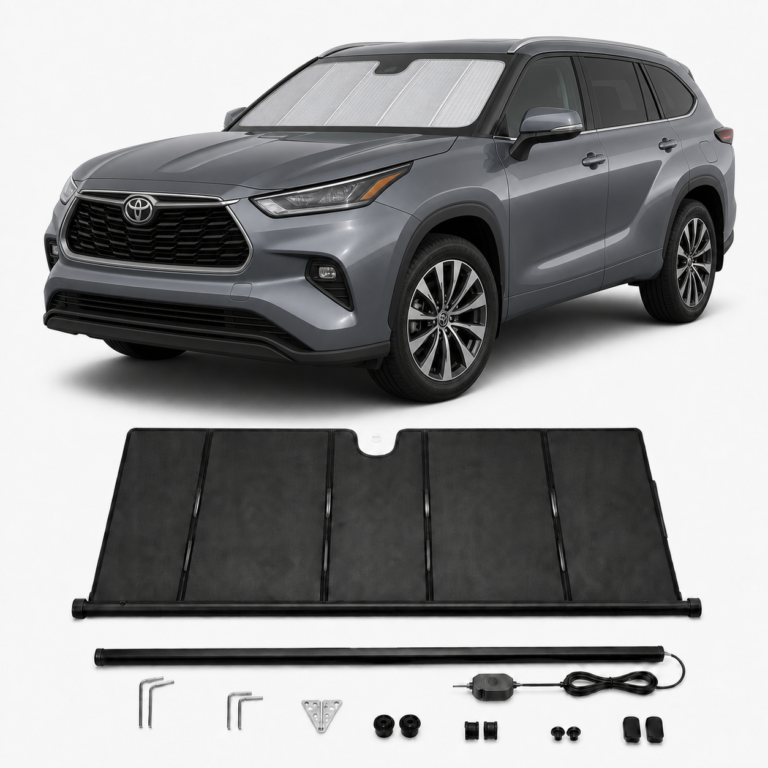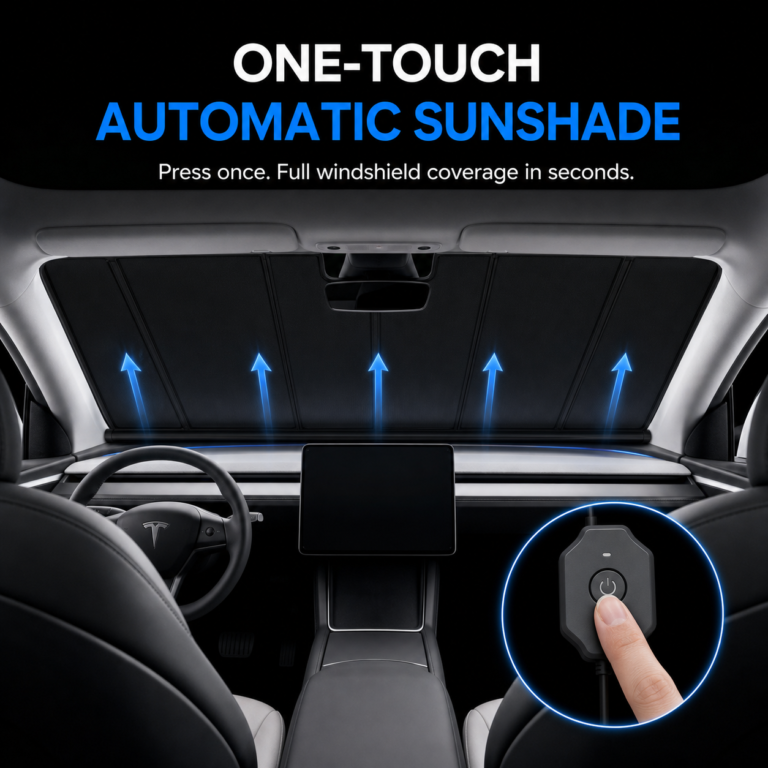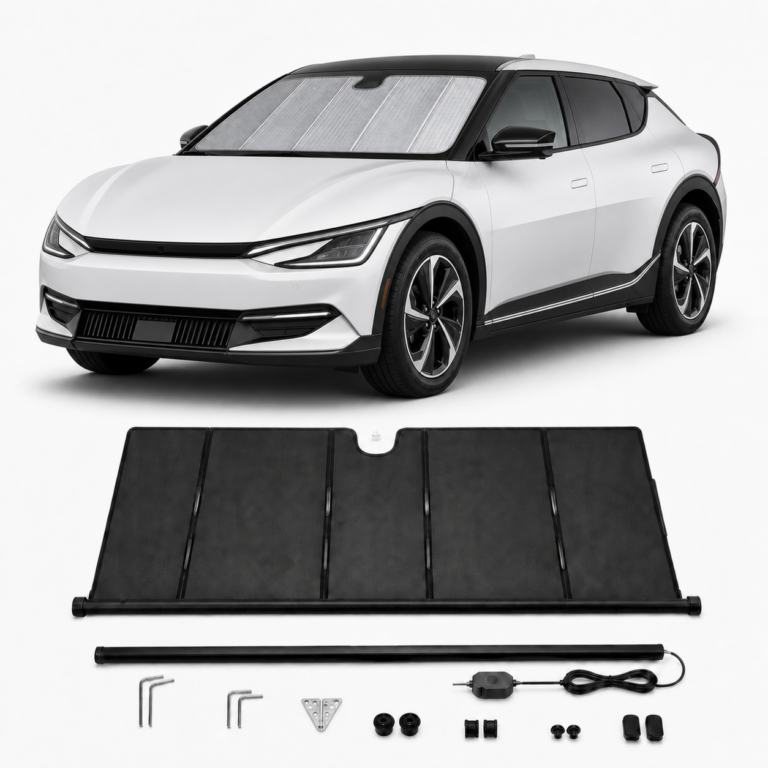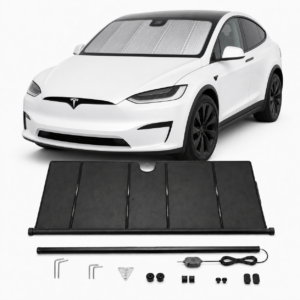
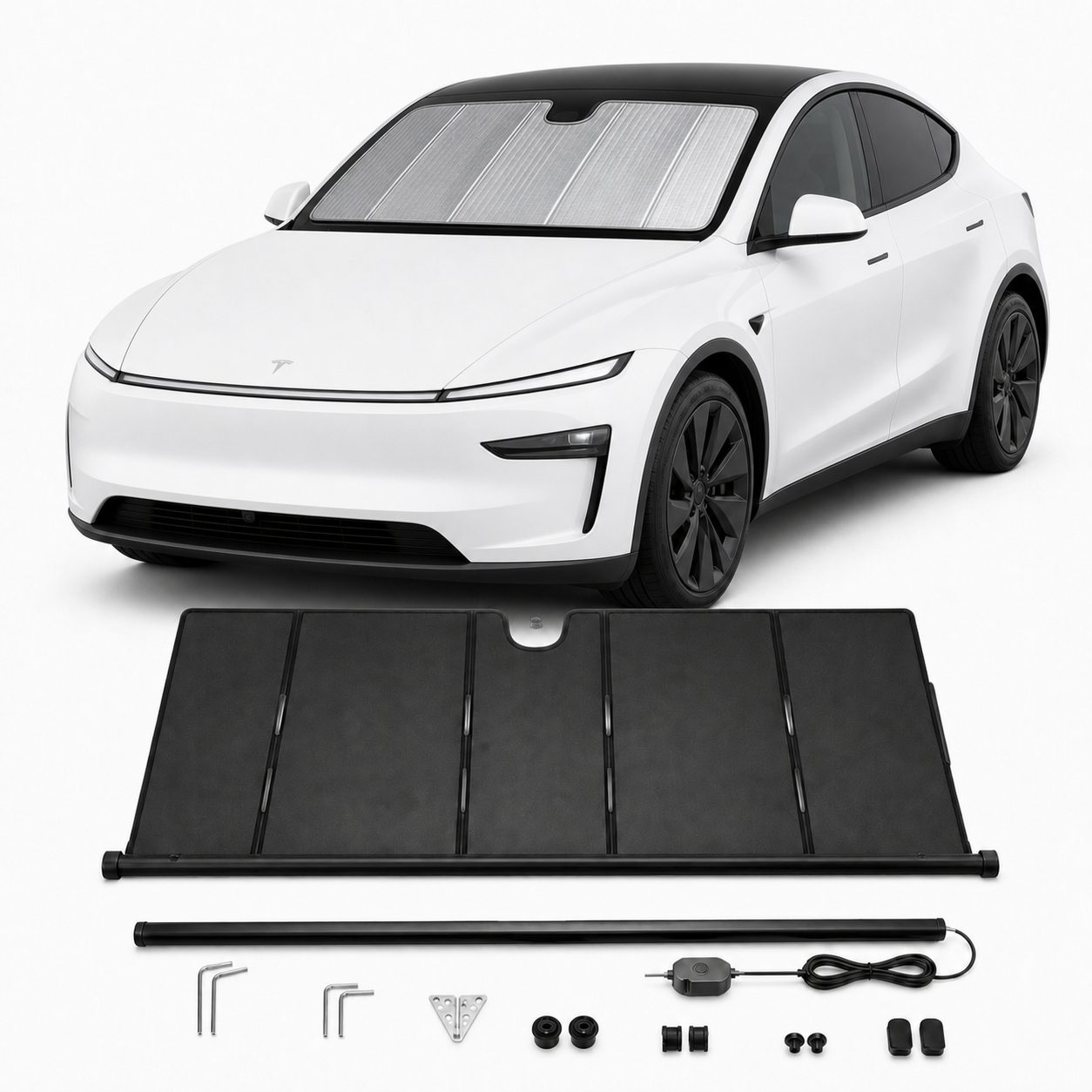
Short answer: Shade the windshield first. It sits right over the dashboard, touchscreen and steering wheel, and Tesla doesn’t give it a heat-rejecting treatment like the glass roof. Pick a model-specific windshield shade: a folding one if you’re on a budget, or an electric one if you want to use it every time you park. Keep Cabin Overheat Protection on as well; a shade makes it work less, it doesn’t replace it.
Quick picks
| Your situation | Best choice | Why |
|---|---|---|
| Park outside in the sun daily, many short stops | Electric windshield sunshade | One button press means you’ll actually use it every time |
| Park in the sun occasionally, tight budget | Folding custom-fit windshield shade | Similar heat blocking for a fraction of the price |
| Very hot climate, passengers complain about the roof | Windshield shade + roof shade | The roof is the second-largest glass area |
| Car sleeping or camping | Full shade set (windshield, roof, side windows) | Privacy and blackout |
Windshield or glass roof: which to shade first?
Model Y and Model 3 owners often buy a roof shade first because the glass roof is so large. For most people, the windshield matters more:
- What’s behind it. The windshield sits directly over the dashboard, the 15-inch touchscreen, and the steering wheel: the surfaces you touch and the ones UV damages most.
- The angle. The Model Y and Model 3 windshields are steeply raked, so a lot of low-angle morning and afternoon sun comes straight through them.
- The roof already has help. Tesla’s glass roof has a heat-rejecting coating; the windshield has to stay clear enough to drive through, so it can’t be treated the same way.
In very hot climates, add a roof shade second. It makes a noticeable difference for rear passengers.
Cabin Overheat Protection vs. a sunshade
Tesla’s Cabin Overheat Protection keeps the cabin from getting dangerously hot while you’re away. According to the Model Y owner’s manual, it runs the fan or A/C when the cabin goes above 105°F (40°C), for up to 12 hours after you leave or until the battery drops below 20%.
The two solve different problems:
| Cabin Overheat Protection | Windshield sunshade | |
|---|---|---|
| How it works | Uses battery energy to cool the air | Reflects sunlight before it heats the interior |
| Starts | Once the cabin passes ~105°F | As soon as it’s up |
| Steering wheel & dash surface | Limited effect; sun still hits them directly | Blocks direct sun on them |
| UV protection for the interior | None | Yes |
| Energy use | Uses battery | None while parked (electric shades use power only to move) |
Using both makes sense: the shade cuts how much heat comes in, so the A/C has less to remove. How much range that saves depends on your climate and how long you park, so be wary of anyone quoting a single precise figure.
Safety note: neither a sunshade nor Cabin Overheat Protection makes a parked car safe for children or pets. Never leave them in a parked car.
Electric vs. folding sunshades for Tesla
Both types block heat about equally when they fit well; the difference is how you use them.
Folding (manual) windshield shades
- Pros: $30–$95, no installation, easy to move to another car.
- Cons: you have to unfold, fit, and fold it every time. Most end up in the frunk or back seat, which means they don’t get used on short stops.
Electric windshield shades
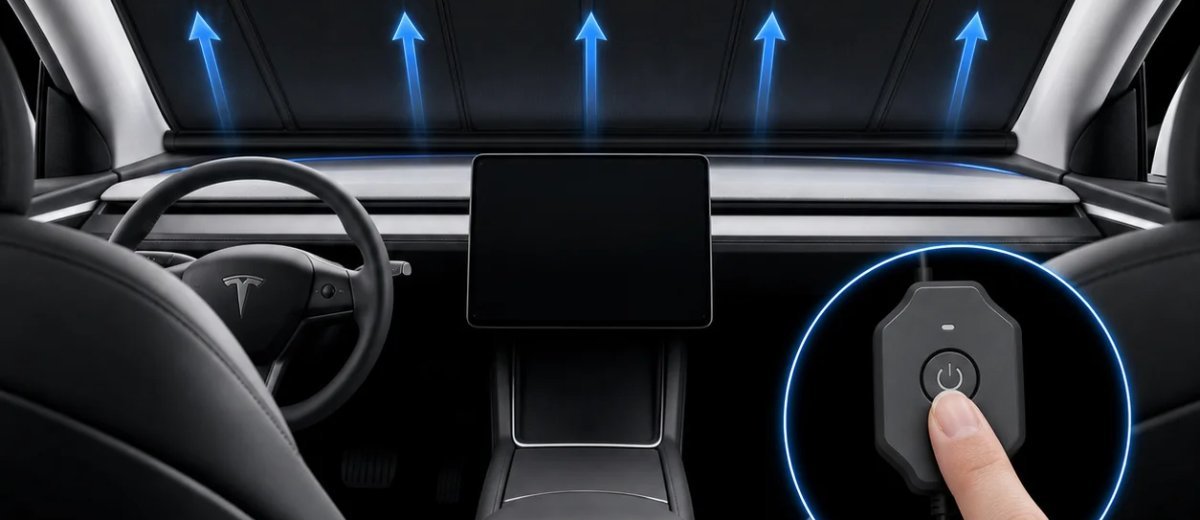
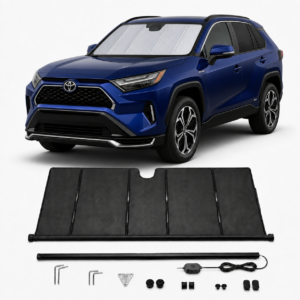
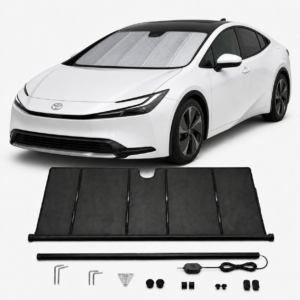
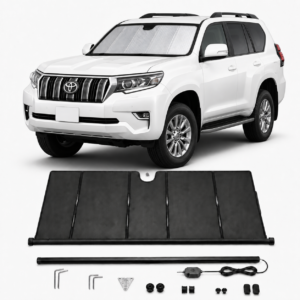
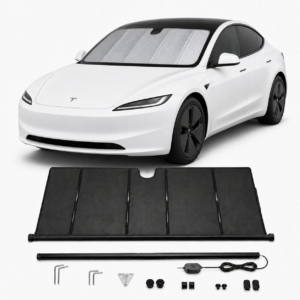
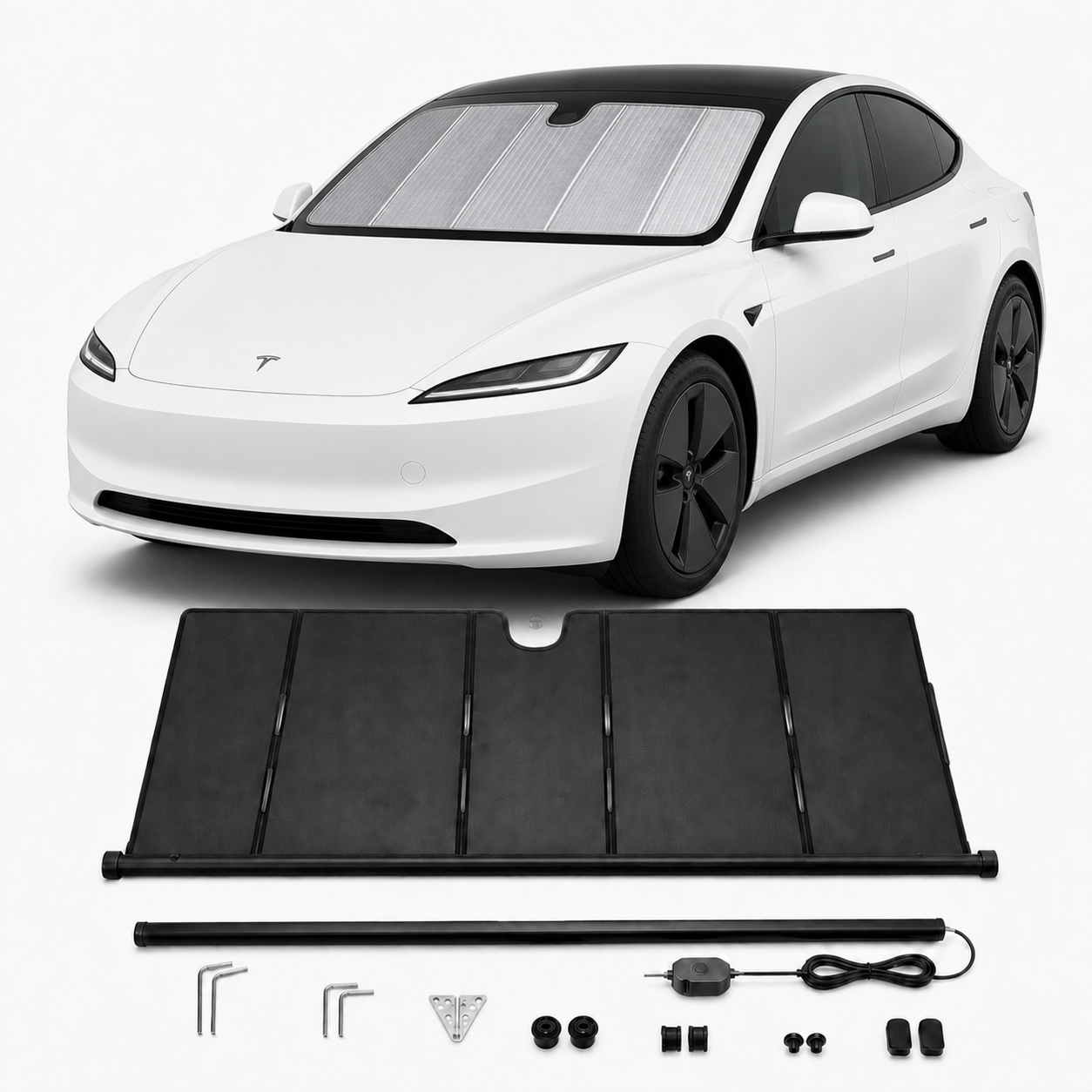
- Pros: one-button deploy and retract, always in place, full-width fit, nothing to store.
- Cons: about $200–$300 for windshield kits, one-time DIY install, model-specific.
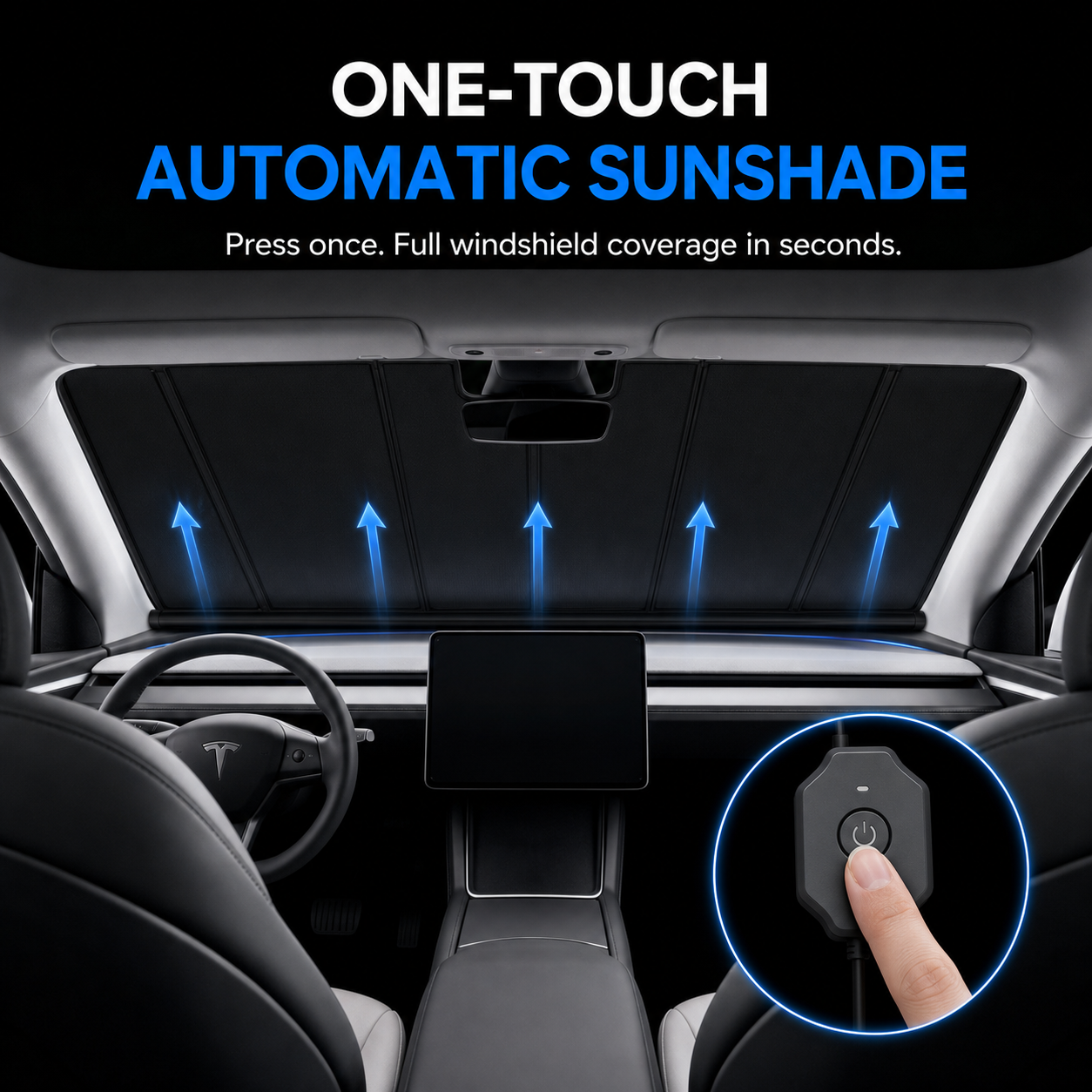
Installing an electric sunshade on a Model Y or Model 3
A typical install for a model-specific kit:
- Clean the base of the windshield and the dashboard edge where the rail sits.
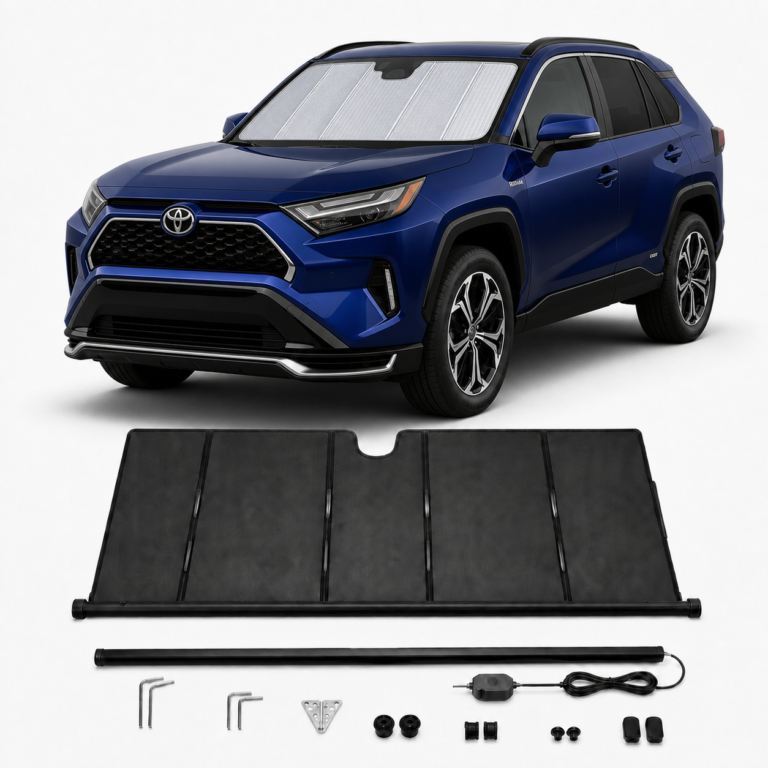
- Fit the support legs and foot pads, then set the rail in place along the base of the windshield.
- Route the cable along the trim to the power port using the included cable clips.
- Plug into the OBD or diagnostic port. Important for Tesla: Model 3 and Model Y don’t all use the same port. Some builds have a standard OBD-II port, others only a Tesla diagnostic connector, which needs an adapter (Geotab’s guide to Tesla diagnostic ports). Check your car before you order.
- Mount the button, test open and retract, and make sure the retracted rail doesn’t block your view.
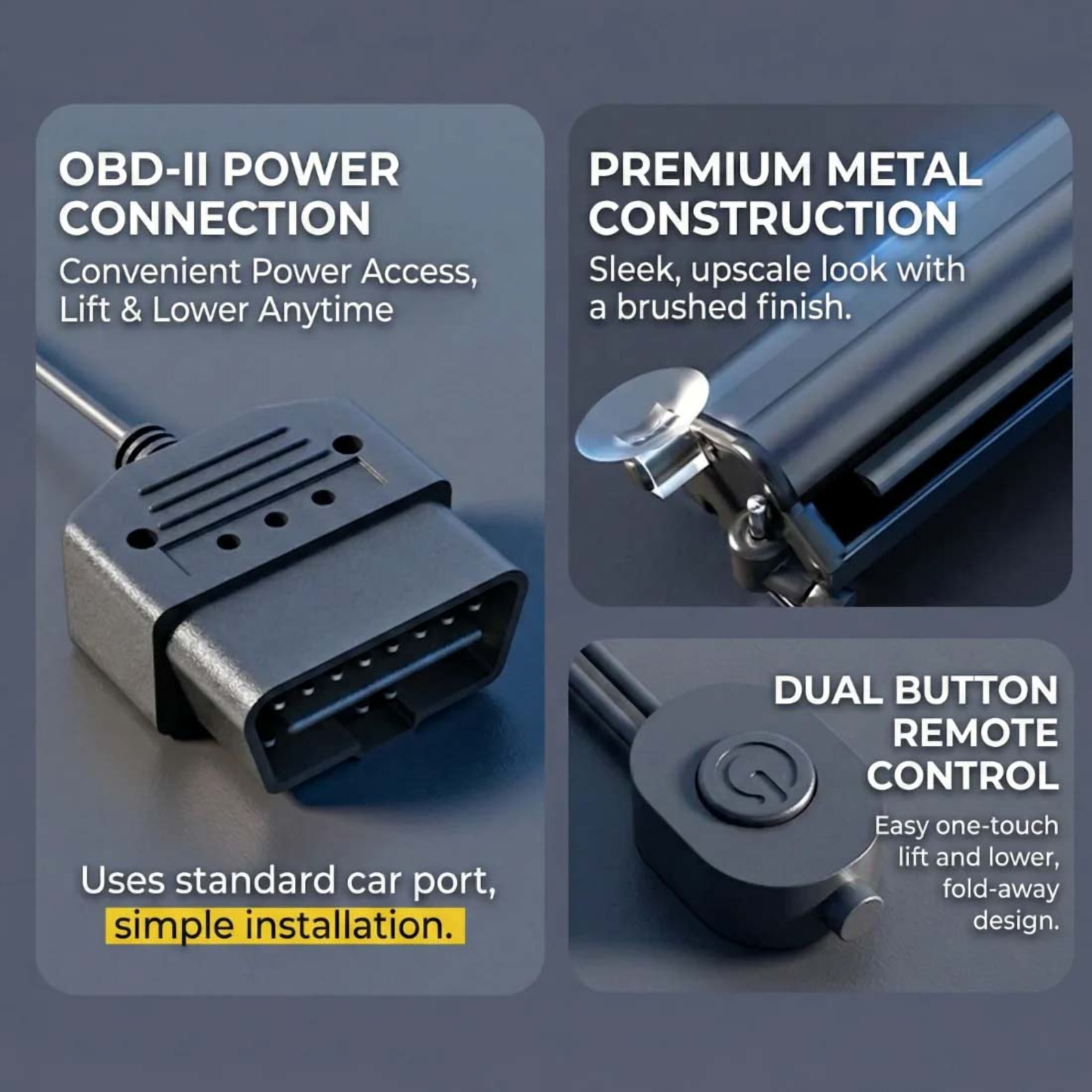
Check the year: Juniper, Highland and older models
Tesla has refreshed both cars: the Model 3 “Highland” and the Model Y “Juniper”. The windshield, mirror housing, and camera area can change between generations, so a shade made for one may not fit another.
- KALDOV Tesla Model Y electric sunshade: listed for Model Y 2020 to early 2025.
- KALDOV Tesla Model 3 electric sunshade: listed for Model 3 2020–2026.
- KALDOV also makes a Tesla Model X kit.
If your car was built near a model-year change, check the year range on the product page carefully before ordering.
FAQ
Does a windshield sunshade block Tesla’s cameras?
When it’s deployed, yes. That’s fine while parked, but it must be fully retracted before you drive. Look for a shade with a cutout around the mirror and camera housing.
Can I leave an electric sunshade up while Sentry Mode is on?
Sentry Mode uses the car’s exterior cameras. A deployed windshield shade covers the inside of the windshield, so it can affect the front camera’s view. If front Sentry coverage matters to you, test it in your own car.
Does a sunshade help EV range?
Indirectly. Less heat coming in means Cabin Overheat Protection and pre-cooling have less work to do. The exact saving depends on your climate and how long you park.
Which side of a sunshade faces out?
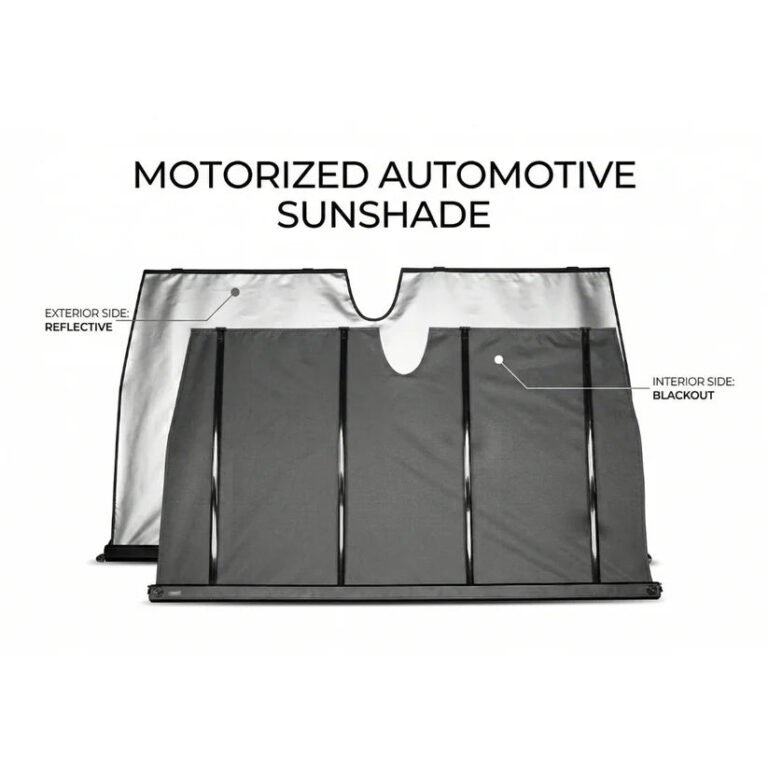
The reflective silver side faces out, toward the glass, to bounce sunlight back out.
Is Tesla’s own sunshade better?
Tesla’s manual sunshades are well-fitted folding shades. Choose them if you’re happy folding a shade each time; choose an electric one if convenience is the reason you’d stop using it.