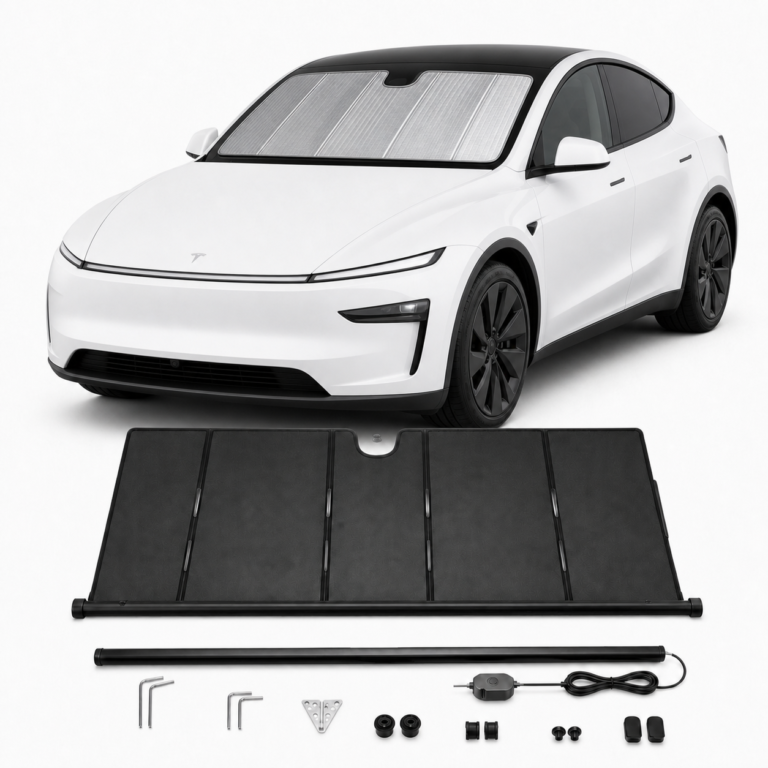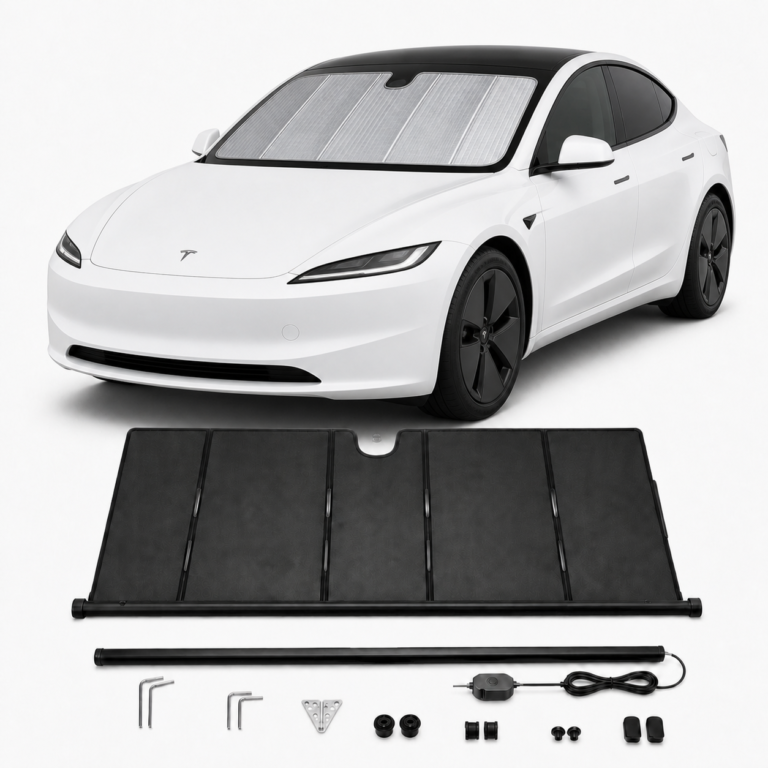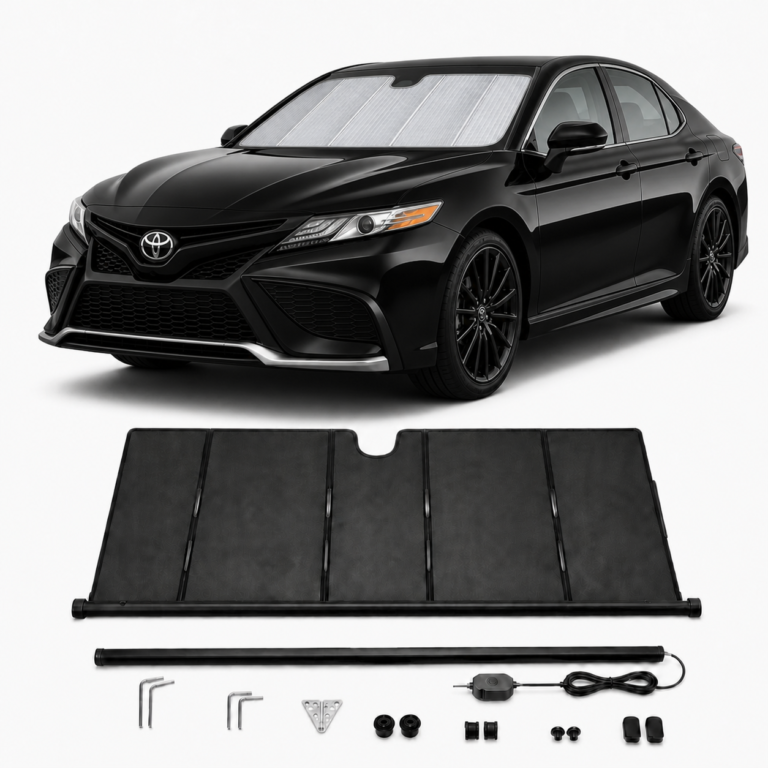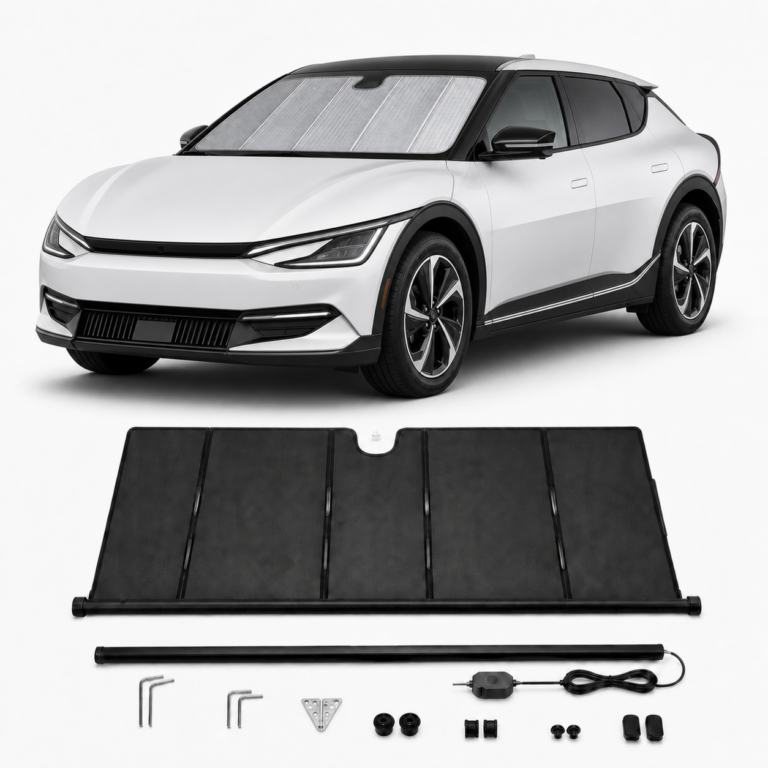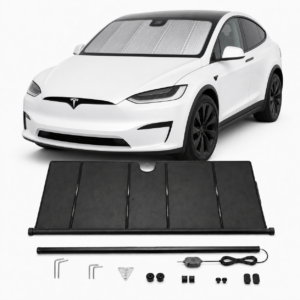
Short answer: Yes, but not the way most people think. A windshield sunshade only lowers cabin air temperature a little (about 4°C / 7°F in ADAC’s test). It makes a big difference to surface temperatures: the steering wheel ran up to 26°C (47°F) cooler. That’s the difference between a wheel you can grip and one you can’t, and years less UV damage to your dashboard.
How hot does a parked car get?
Hotter and faster than most people expect:
- The US National Highway Traffic Safety Administration says an enclosed car can heat up 19°F in just 10 minutes. (NHTSA)
- In ADAC’s test, an unprotected car’s cabin air reached 50°C (122°F) after 30 minutes and 60°C (140°F) after 90 minutes, and the steering wheel and dashboard went above 70°C (158°F). (Carscoops)
Researchers at Arizona State University and UC San Diego measured cars parked for one hour on hot days in Tempe, Arizona (Vanos et al., Temperature, 2018):
| After 1 hour | Parked in sun | Parked in shade |
|---|---|---|
| Cabin air | 116°F | 100°F |
| Dashboard | 157°F | 118°F |
| Steering wheel | 127°F | 107°F |
| Seats | 123°F | 105°F |
The pattern to notice: surfaces get far hotter than the air, because sunlight coming through the glass heats them directly. That’s exactly what a sunshade blocks.
What sunshade tests actually measured
In 2021, Germany’s auto club ADAC tested different heat-protection methods side by side at its technical center in Landsberg am Lech (as reported by Carscoops):
| Method | Cabin air temperature | vs. unprotected car |
|---|---|---|
| External half-cover (outside the glass) | 43°C (109°F) | 10°C (18°F) cooler |
| Reflective windshield film | 45°C (113°F) | 8°C (14°F) cooler |
| Interior accordion sunshade | 49°C (120°F) | 4°C (7°F) cooler |
| White cloth on the dashboard | 50°C (122°F) | Reported as negligible |
Figures as reported by Carscoops; see the source for full test conditions and timing.
The headline number people miss: the interior shade cut the steering wheel’s surface temperature by up to 26°C (47°F).
Older US research points the same way. A 1988 University of Central Florida study (reported by Jalopnik) found a simple cardboard shade cut dashboard temperature by about 40°F and cabin temperature by about 15°F, and foil-faced shades cut the dashboard a further 6–11°F.
Why a sunshade helps surfaces more than air
Sunlight passes through the windshield and hits the dashboard, wheel and seats, which absorb it and heat up. They then warm the air slowly and radiate heat for a long time after.
A reflective sunshade stops most of that light before it reaches those surfaces. But the glass itself and the air trapped between the glass and the shade still get hot, and the roof, doors and side windows keep heating the cabin. So the air stays warm while the surfaces stay much cooler.
5 things that decide how well a sunshade works
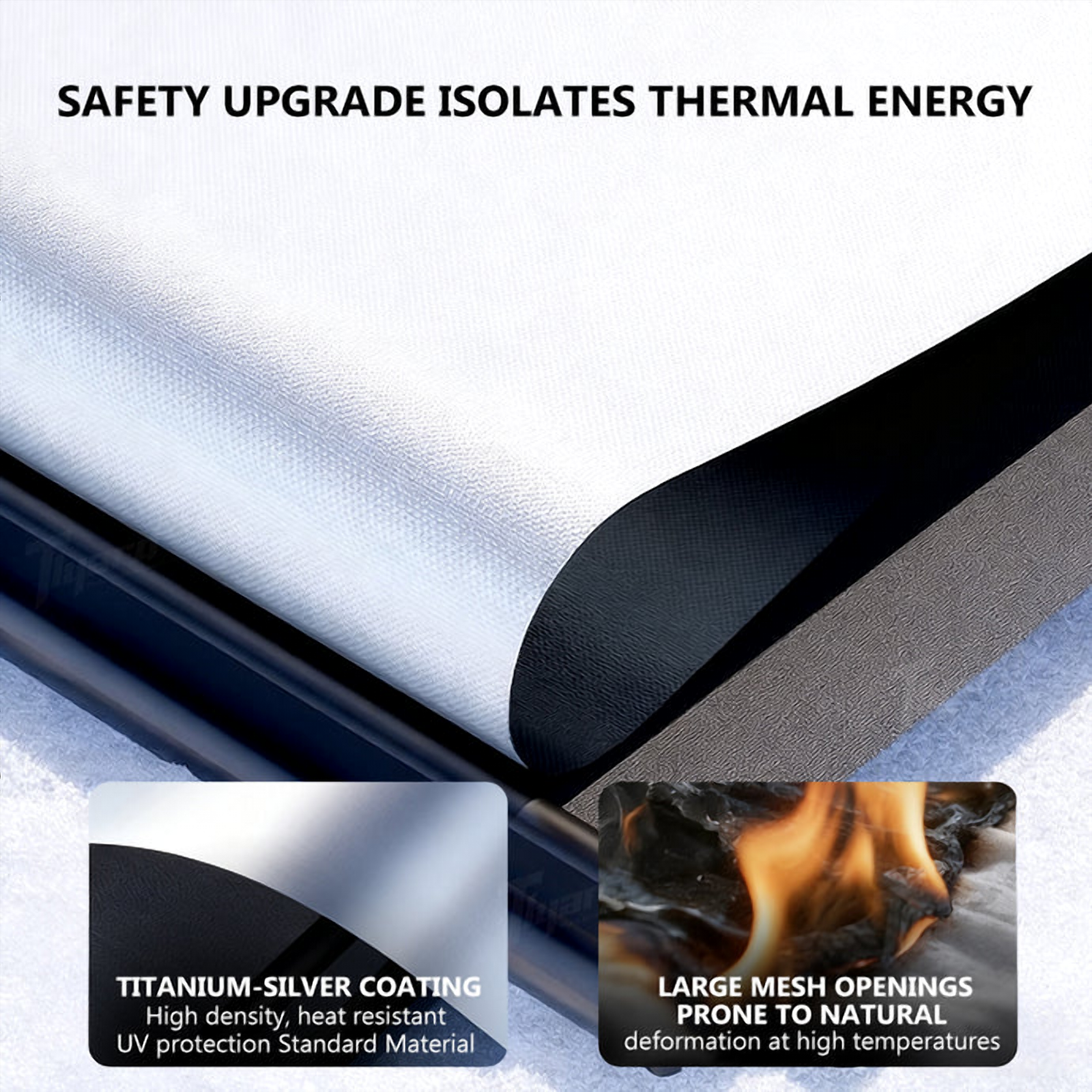
- Coverage and fit. Gaps at the edges and around the mirror let sun hit the dash directly. Model-specific shades beat universal ones here.
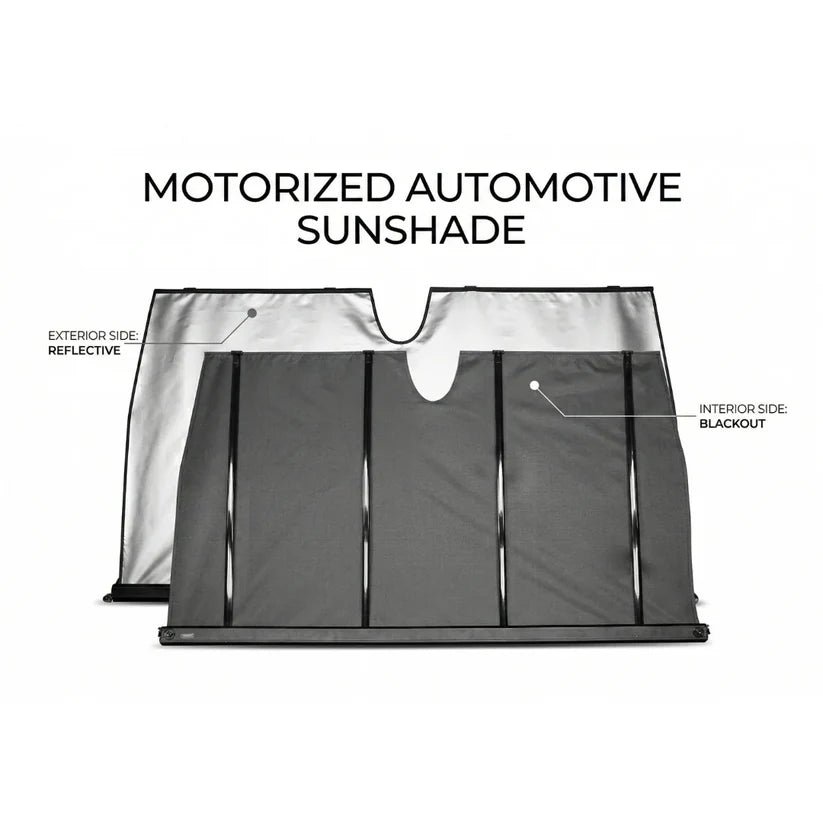
- Reflective side facing out. Silver out, toward the glass. The dark side faces the cabin.
- Using it every time. The most common failure isn’t the shade, it’s leaving it in the back seat. Quick-to-deploy shades (roll-up or electric) get used more.
- Inside vs. outside. External covers block more heat (10°C vs. 4°C air reduction in ADAC’s test) but are a hassle to fit, get dirty, and can be stolen. Interior shades win on daily convenience.
- Other glass. In very hot climates, the glass roof, rear window and side windows matter too. Paint color matters as well: ADAC measured black panels at 65°C (149°F) vs. 44°C (111°F) for white.
Sunshades and dash cams
A reflective sunshade traps a pocket of very hot air between the shade and the windshield, which is exactly where a dash cam sits. Dash cam makers and owner forums warn that this can push cameras past their rated temperature. If you run a dash cam:
- Pick a shade with a cutout around the mirror and camera area.
- Use a dash cam with a supercapacitor rather than a lithium battery; they tolerate heat better.
- Consider parking modes that don’t record constantly in extreme heat.
Is a sunshade worth it?
If you park in the sun regularly, yes. It’s the cheapest way to protect the surfaces you touch and the dashboard materials that fade and crack over the years. Just set your expectations: it keeps the wheel and dash cool, not the air. For that you still need the A/C, or remote pre-cooling in an EV.
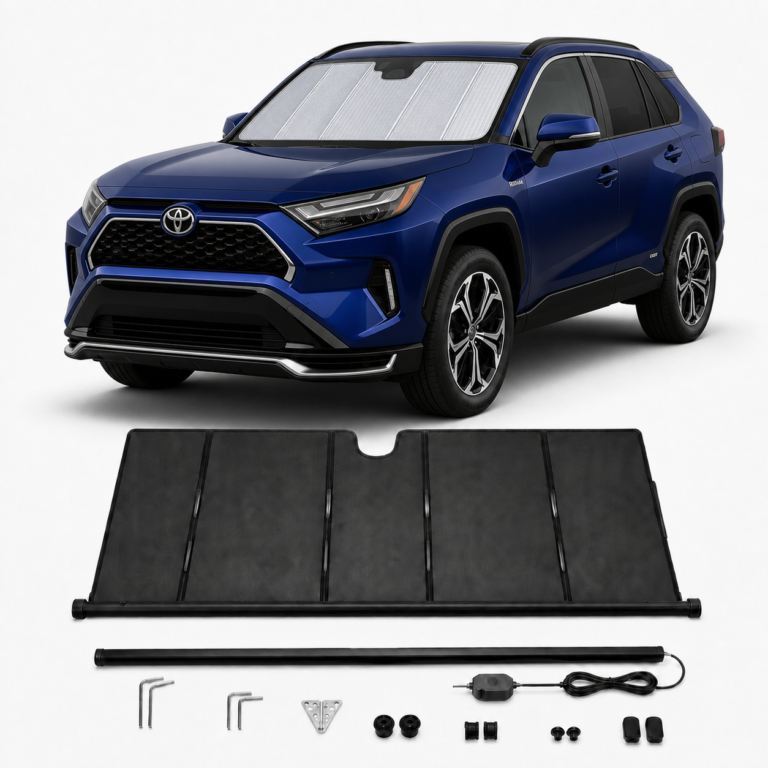
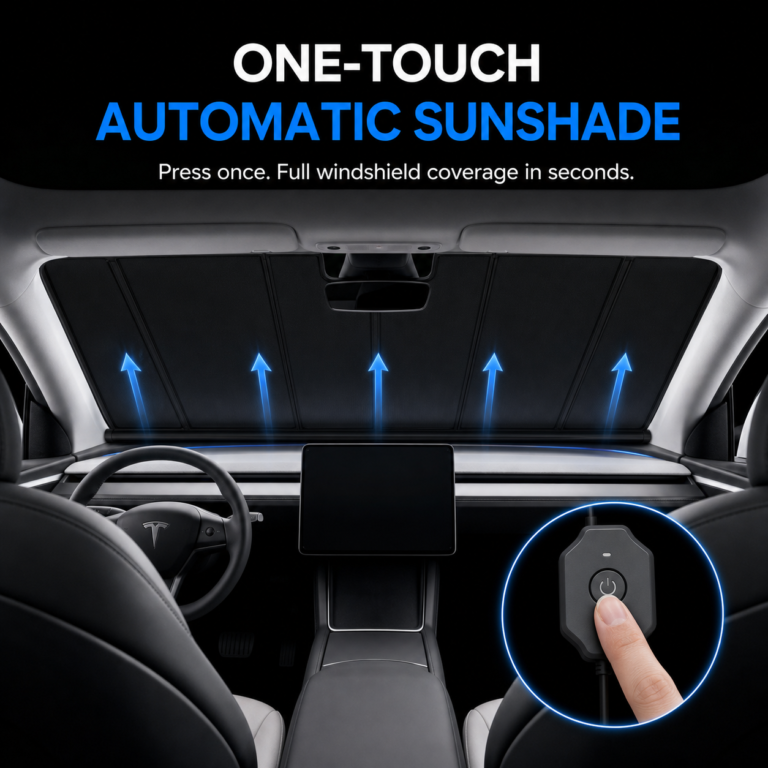
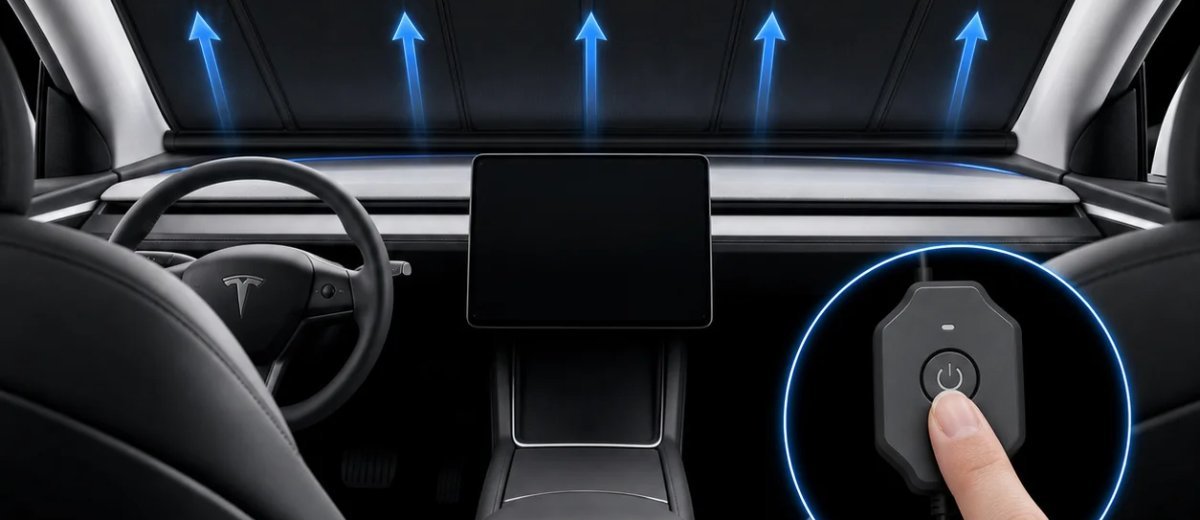
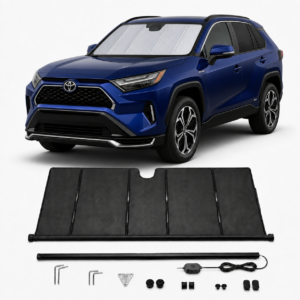
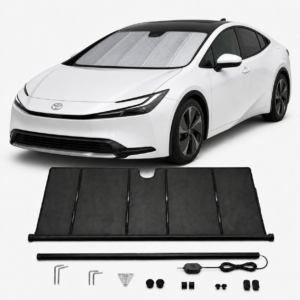
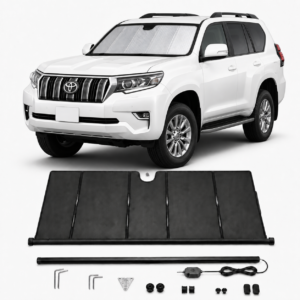
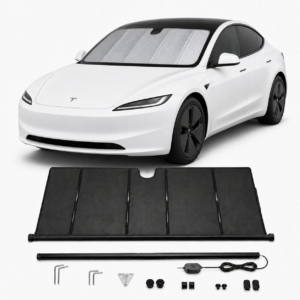
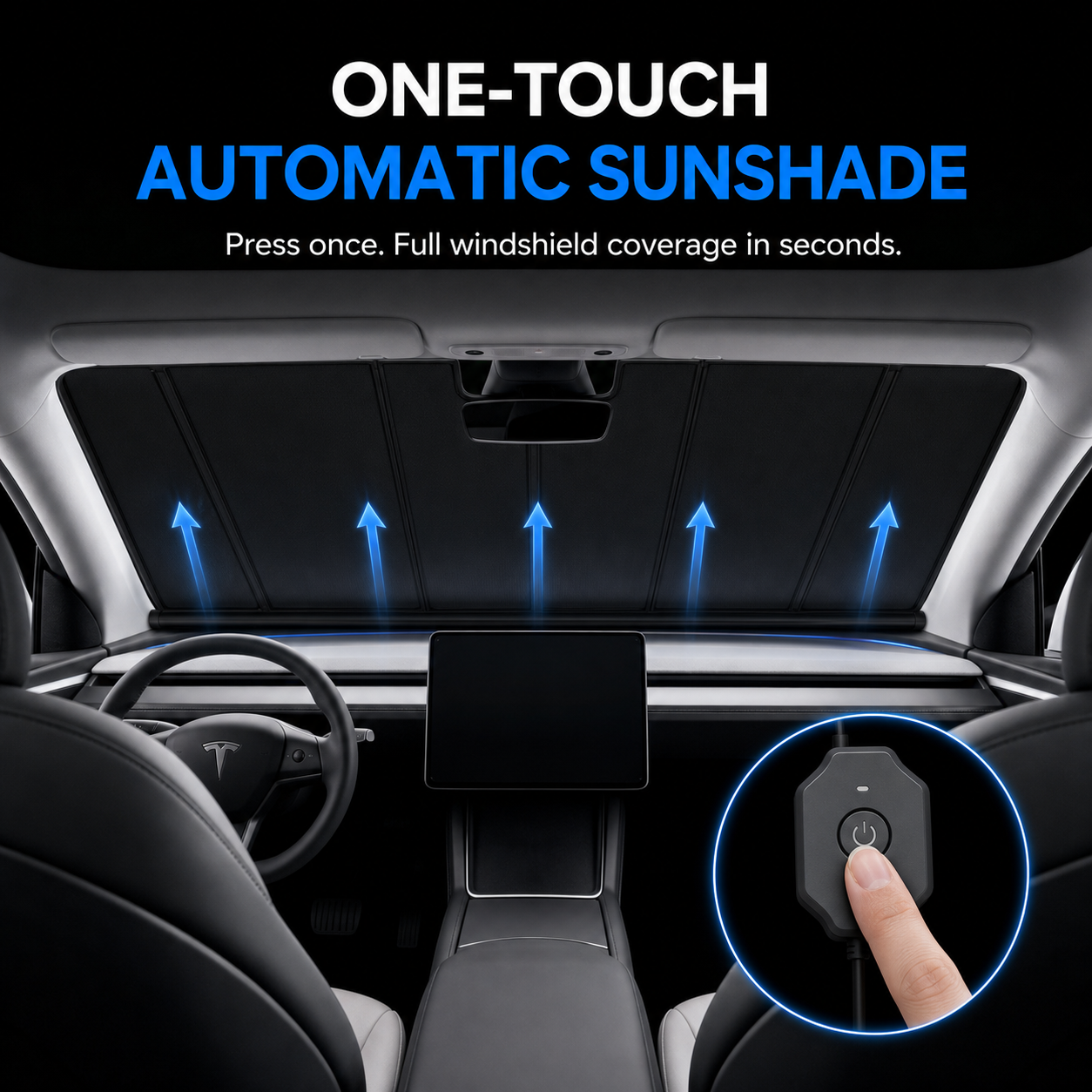
If the main reason you’d skip a sunshade is the hassle of folding it, an electric windshield sunshade removes that step. We compare the options in Are Electric Windshield Sunshades Worth It?
FAQ
How much cooler does a sunshade keep a car?
For cabin air, only a few degrees: about 4°C (7°F) for an interior shade in ADAC’s test. For surfaces, much more: up to 26°C (47°F) cooler on the steering wheel.
Is it better to put a sunshade inside or outside?
Outside keeps more heat out, but inside is far more practical for daily use.
Which side of a sunshade faces out?
The reflective silver side faces out.
Do sunshades protect the dashboard from cracking?
They reduce the UV and heat that break down dashboard materials over time, which is one of the main long-term benefits.
Can a sunshade make a car safe for kids or pets?
No. A car can still reach dangerous temperatures within minutes, shade or not. Never leave children or pets in a parked car.