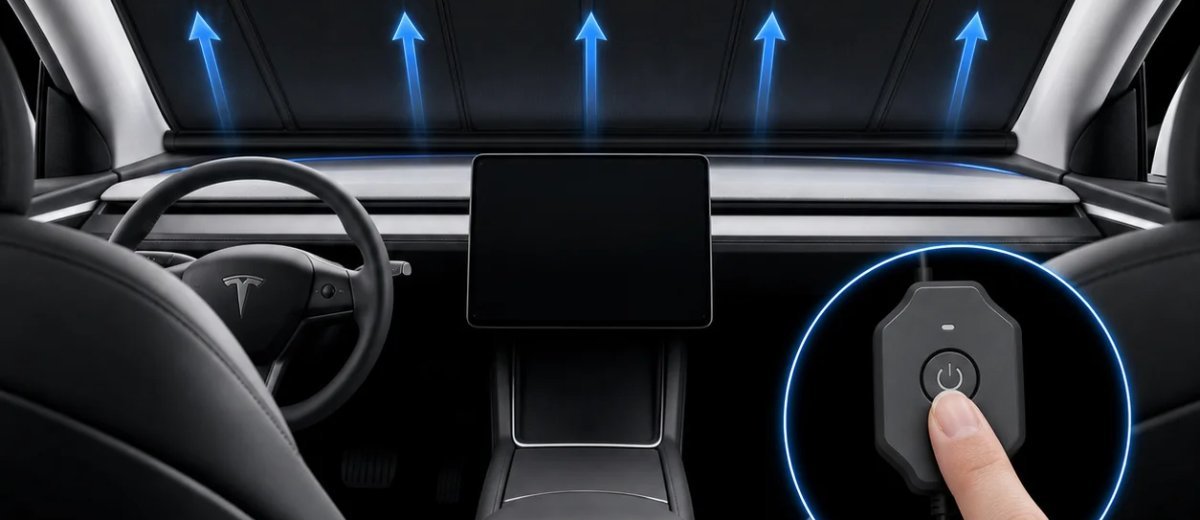
If you are choosing between a folding windshield sun shade and a one-touch electric shade, here is the short answer: folding wins on price and simplicity, electric wins on daily use. If you put a shade up nearly every day, electric is the upgrade that actually gets used. If you need a shade occasionally and want to spend as little as possible, folding is the right call.
The rest of this guide breaks down exactly where each type wins, where each loses, and when it makes sense to switch from one to the other.
The Quick Verdict
| Folding windshield sun shade | One-touch electric sunshade | |
|---|---|---|
| Price | Lower | Higher |
| Daily effort | Unfold, position, tuck, fold, store — every time | Press a button |
| Fit (custom-fit versions) | Full windshield, model-matched | Full windshield, model-matched |
| Best for | Occasional use, tight budgets | Daily sun parking, people who hate the folding routine |
| Main weakness | The routine gets old; folds and edges wear with heavy use | Costs more; motor and mechanism are the parts to watch |
| Main strength | Simple, cheap, no power needed | Easiest shade to actually use every day |
Both types must be fully retracted and out of the way while driving. Neither is a drive-with-it-up product.
Cost: The Clearest Difference
A folding shade is the cheaper option, full stop. It has no motor, no wiring, and no electronics — just material and a frame — so it costs a fraction of an electric shade.
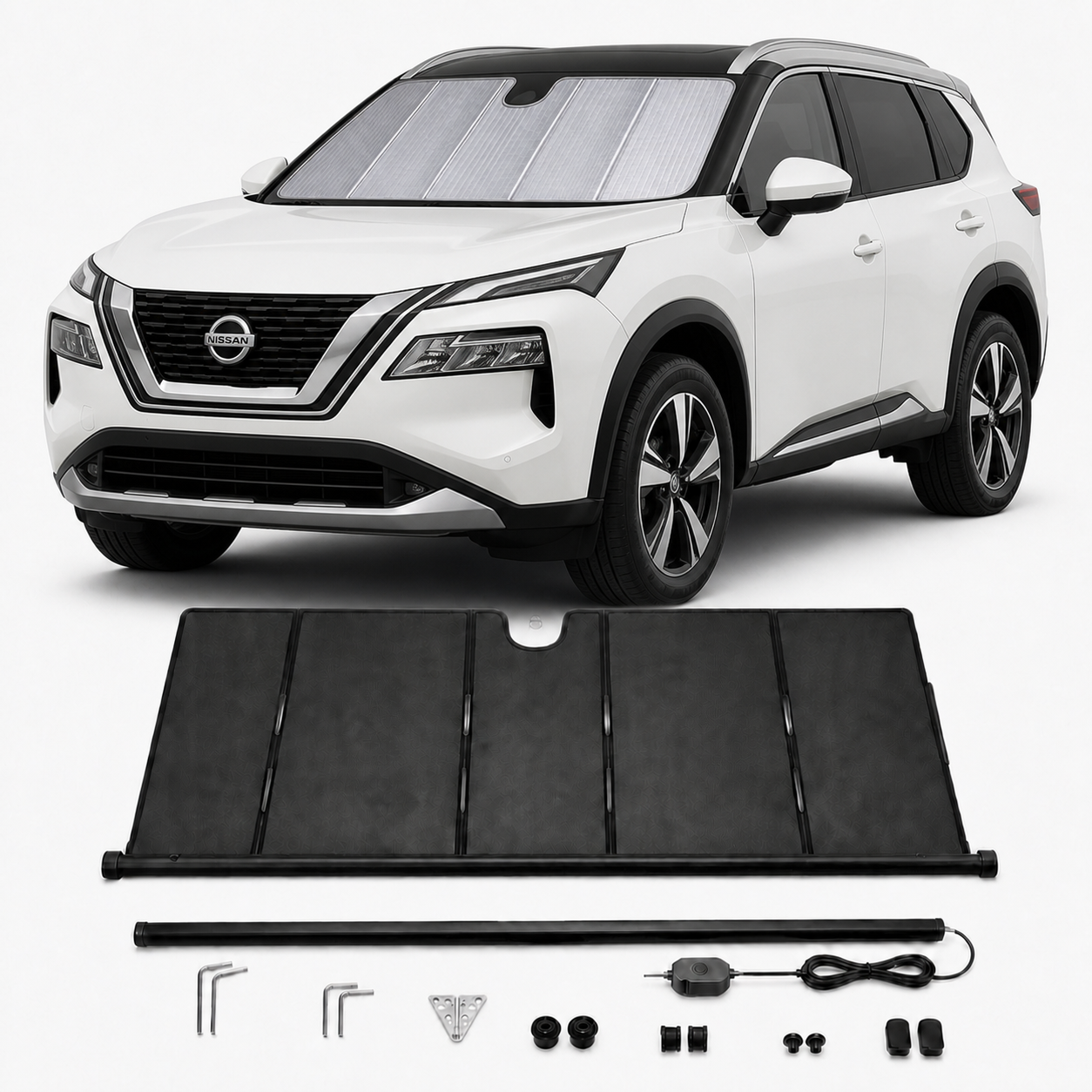
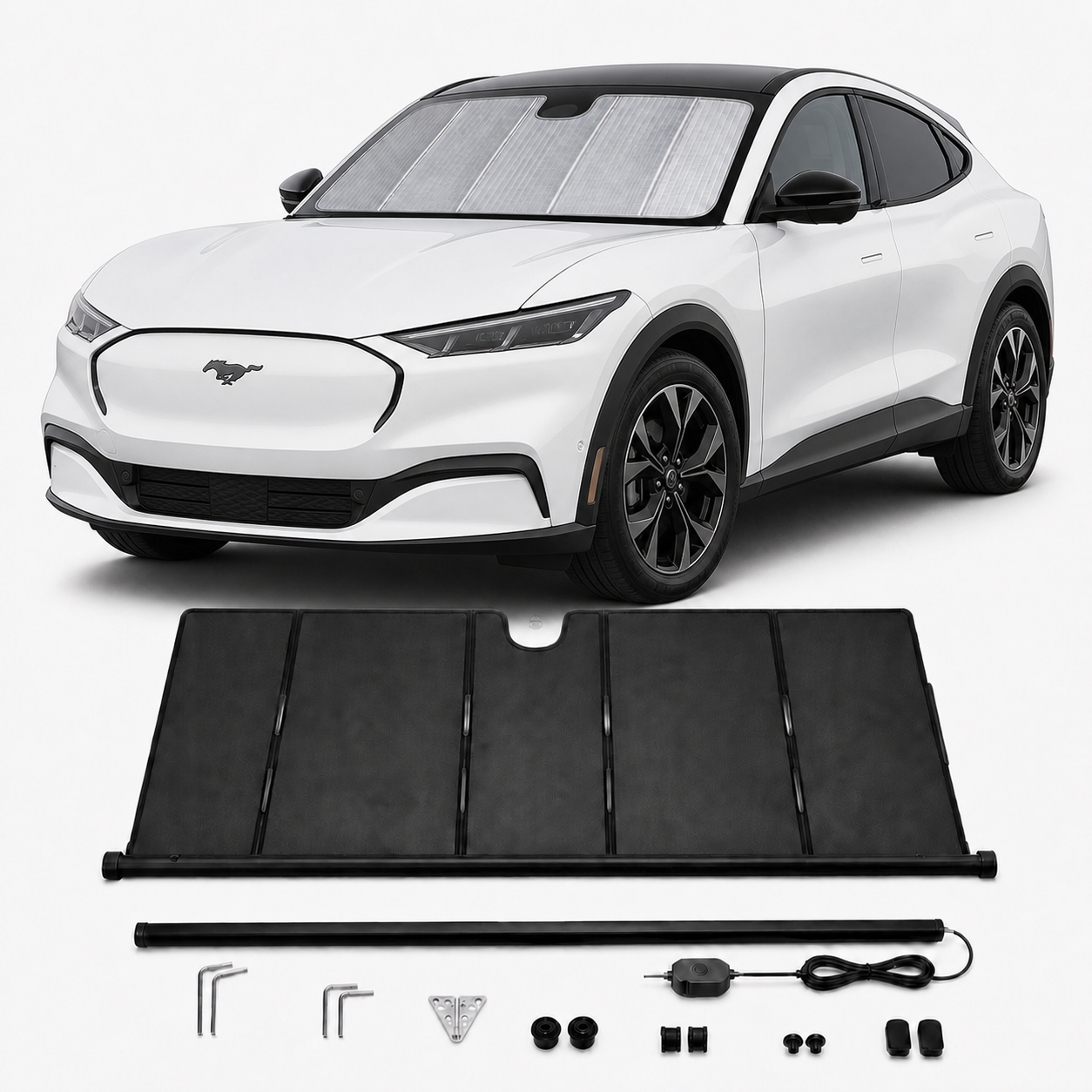
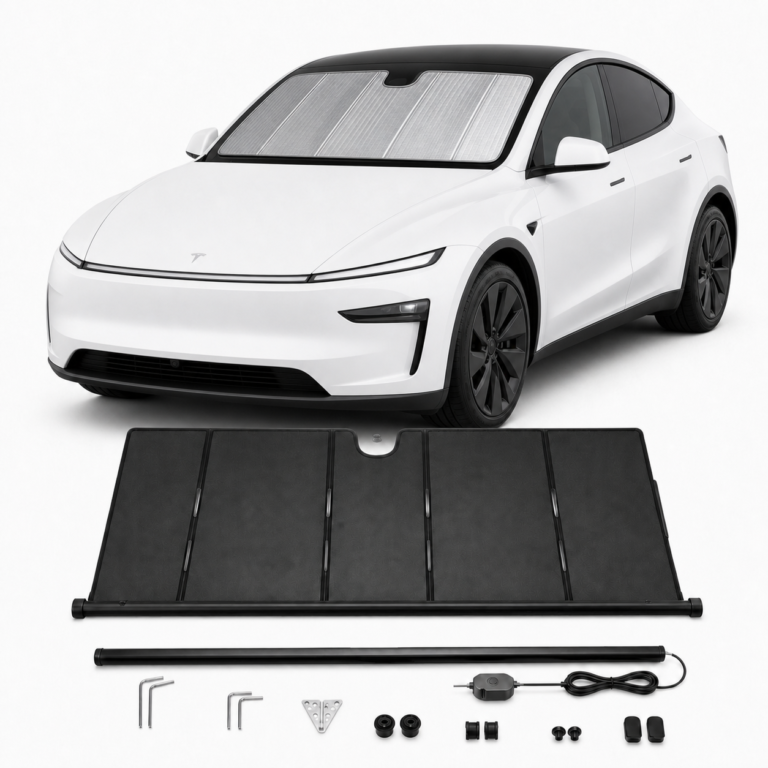
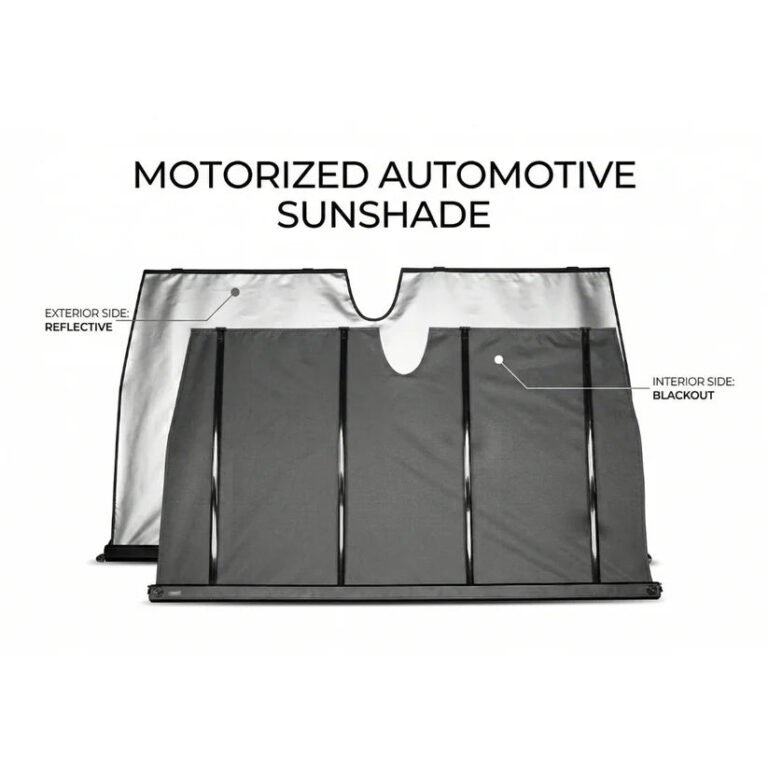
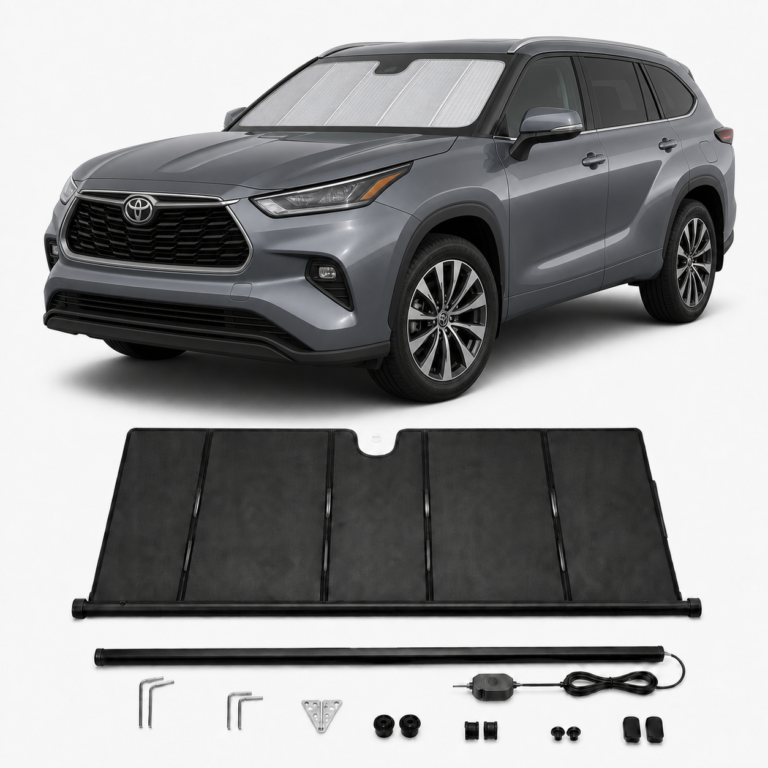
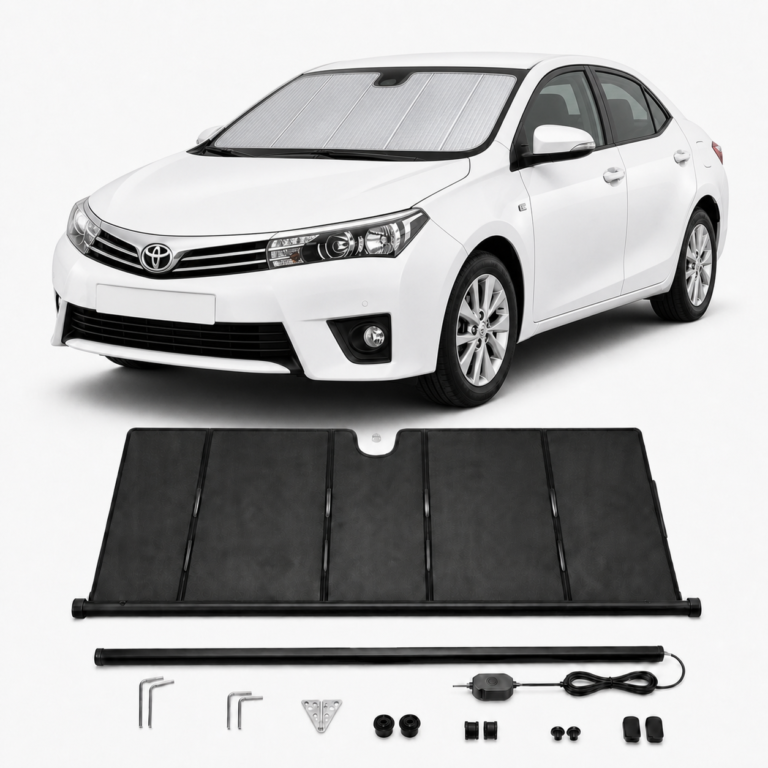
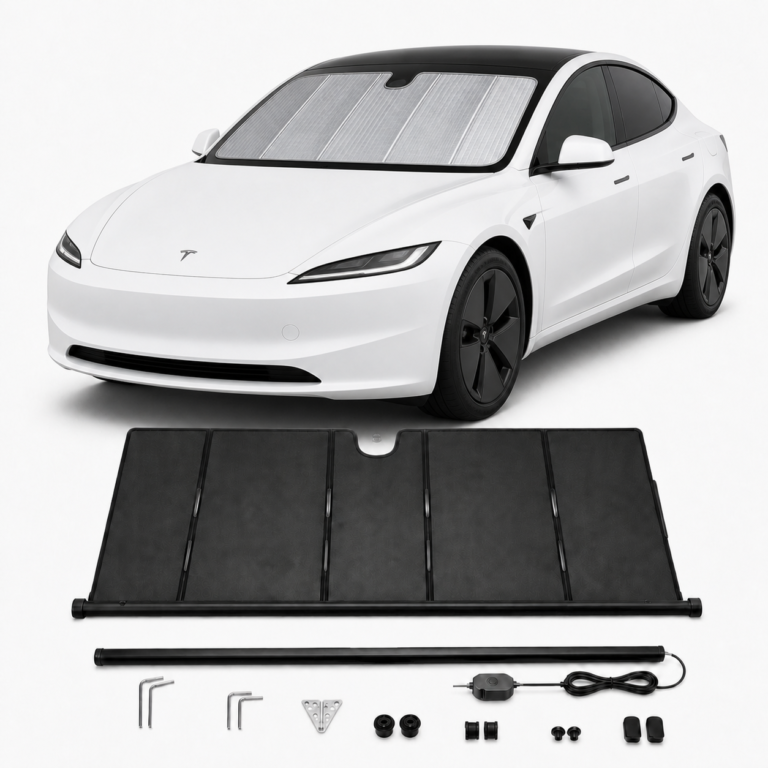
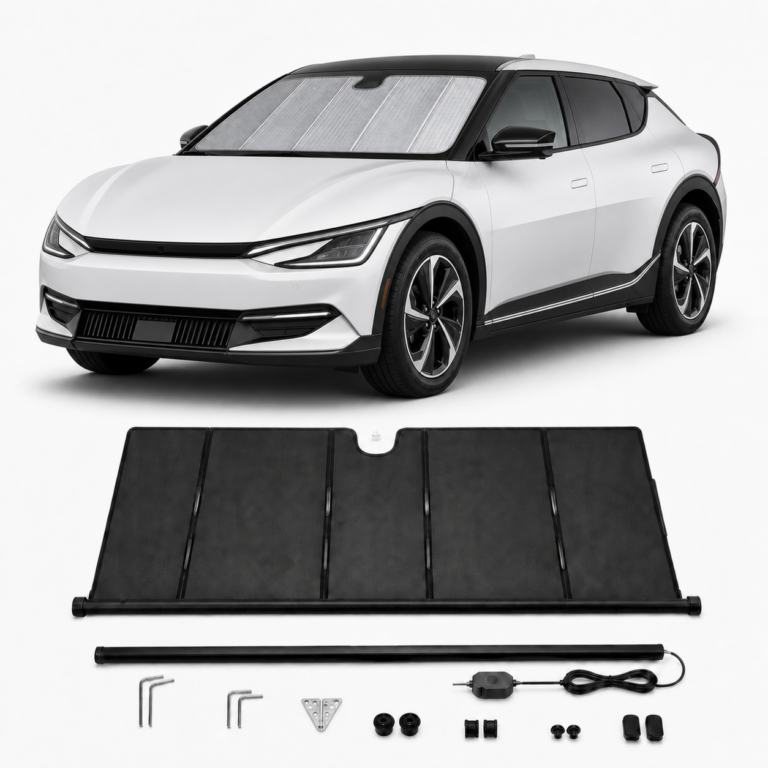
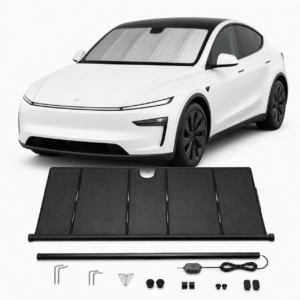
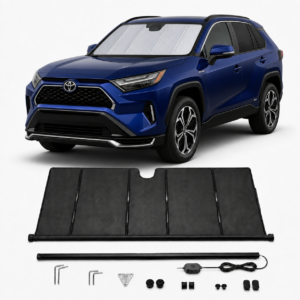
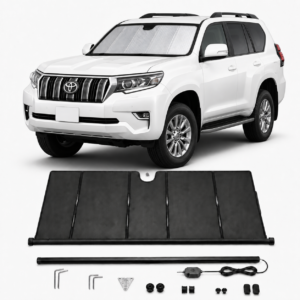
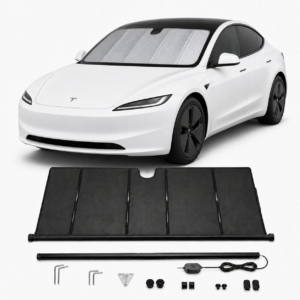
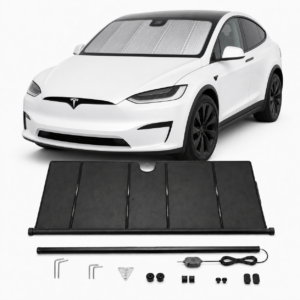
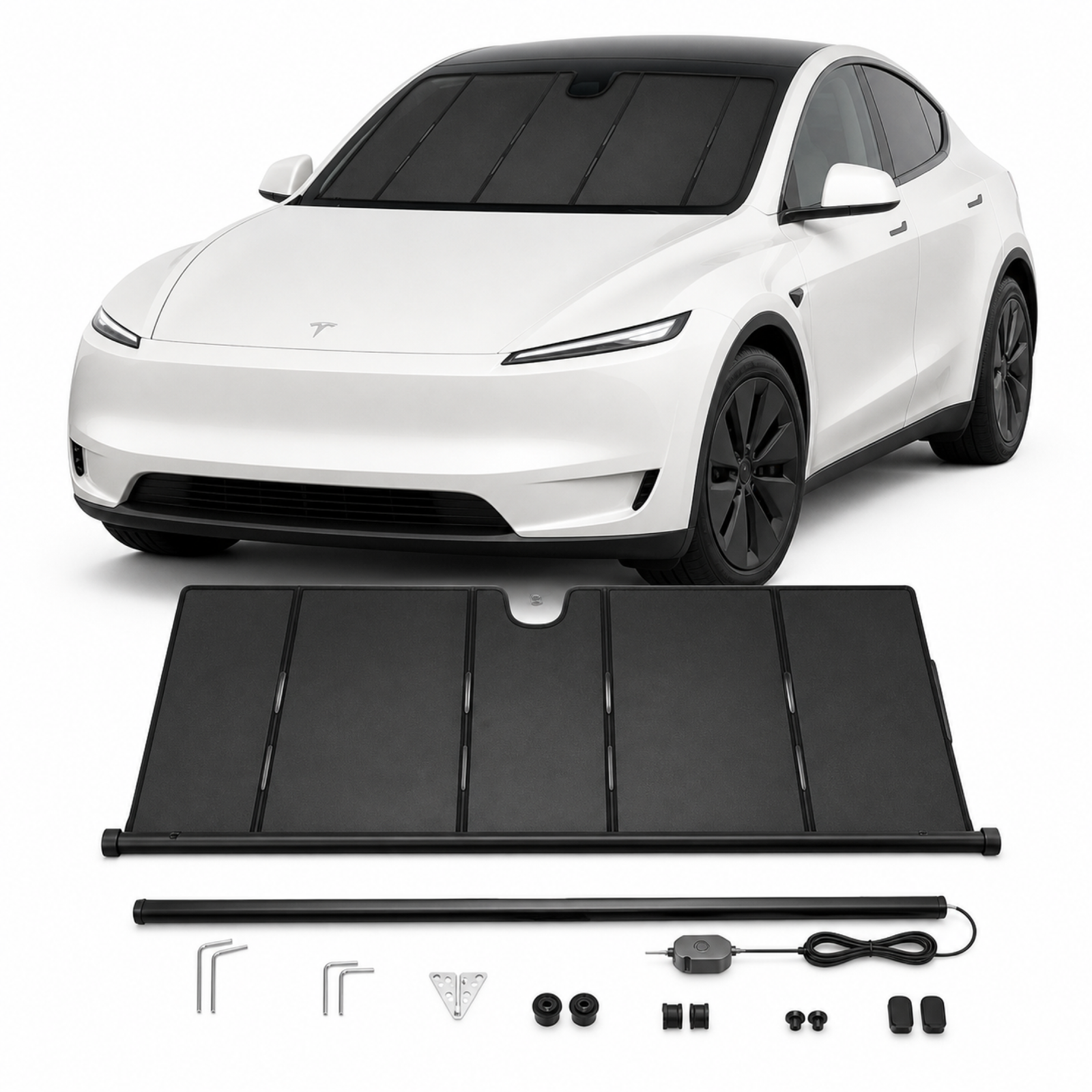
An electric shade costs more because you are paying for the motor, the mechanism, the custom housing, and the one-touch operation. KALDOV’s electric shades, for example, cost $314 for the Tesla Model Y version and $314 for the Tesla Model 3 version, $291 for the Toyota Highlander version, $324 for the Ford Mustang Mach-E version, and $349 for the Nissan Rogue version — prices include free shipping. Those are premium prices compared with a folding shade, and there is no point pretending otherwise.
The fair way to think about the gap is per use. A shade you use 200 days a year for several years spreads its cost thin. A shade you use ten times a year does not. Cost per use, not sticker price, is the number that matters.
Daily Effort: Where Electric Earns Its Price
This is the real comparison, and it is not close.
Folding shade routine, every time you park in the sun:
- Take the shade out of storage.
- Unfold it.
- Position it across the windshield.
- Tuck the edges so it stays put.
- When you leave, reverse the whole process and fold it back down.
It takes under a minute, but it is a fiddly minute in a hot car, and you do it twice a day, every sunny day. Plenty of people do it happily. Plenty of people stop after a few weeks, and the shade ends up in the trunk.
Electric shade routine:
- Press a button.
The shade opens on its own when you park and closes on its own when you leave. There is no unfolding, no tucking, no folding it back into a circle in a parking lot. For a daily driver, that difference compounds fast — it is the difference between a shade that is always up and a shade that is sometimes up.
If you genuinely enjoy a simple manual routine, or you only need a shade a few times a month, the folding routine is no burden at all. If you already know you abandon fiddly routines, be honest about it: the cheapest shade is the one you actually use.
Fit and Coverage: A Tie, If You Buy Custom-Fit
Fit does not separate these two types — buying custom-fit does. A folding shade cut for your exact model and an electric shade cut for your exact model both cover the full windshield. A universal shade of either style is where coverage gets unreliable, because one size has to stretch across many different windshield shapes and may leave gaps on some cars.
So the rule is the same for both: buy the version made for your exact year, make, model, and trim, and check the product page for your car before ordering. Do not judge folding versus electric by a universal shade’s fit problems — that is a fit problem, not a type problem.
Durability: Different Wear Points
Each type wears in a different place:
- Folding shades wear at the folds and edges. Daily unfolding and refolding stresses the same creases, and thinner materials show it sooner. A well-made folding shade lasts a long time with occasional use; with heavy daily use, the folds are usually what gives out first.
- Electric shades wear at the motor and mechanism, since those are the moving parts doing the work. The frame matters too — KALDOV uses an aluminum frame, and the shades weigh about 1.7 kg. Because the mechanism is the wear point, the warranty on it matters: KALDOV covers the motor and mechanism for 1 year.
Neither type is maintenance-free forever. The question is which wear pattern matches your use: occasional folding, or daily button presses backed by a mechanism warranty.
Power and Installation: What Electric Adds
A folding shade needs nothing — no power, no installation, just unfold and go. That is a genuine advantage: it works in any car, including a rental or a second car you barely drive.
An electric shade needs power and a one-time install. KALDOV shades are powered through the car’s OBD port (12V–16V), use a quiet 12W motor, and install in about 5 minutes with no tools. That is a small one-time cost for a daily convenience, but it is a real requirement: if your car does not have a compatible OBD power source, or you do not want anything installed in the car, folding is the simpler choice.
When a Folding Shade Still Makes Sense
Folding is the right choice when:
- Your budget is tight. A good folding shade delivers the same coverage for much less money.
- You only need a shade occasionally — a few hot weeks a year, or a car you drive on weekends.
- It is a second car, a rental, or a car you will sell soon. No install, no commitment, and it moves with you.
- You like simple gear with nothing to go wrong. No motor, no wiring, nothing to troubleshoot.
- You want a backup. Some drivers keep a folding shade as a spare even after upgrading.
There is nothing outdated about a folding shade. It is a proven, simple product. It just asks you to do the work every time.
When to Upgrade to Electric
Electric is the right choice when:
- You park in the sun almost every day. The daily routine is where the upgrade pays for itself.
- You have already abandoned a folding shade. If the routine is why your last shade went unused, a cheaper replacement will not fix the actual problem.
- You want full coverage without thinking about it. One press, full windshield, every time.
- You keep your car for years. The per-day cost drops fast with daily use over a long ownership.
- Ease matters more than the price gap for you. Some buyers simply prefer the automatic experience, and that is a valid reason on its own.
The upgrade is not about being fancy. It is about removing the one reason shades go unused: the daily hassle.
What to Check Before Buying Either Type
- Your exact model and year. Both types only fit well when they are made for your car. Check the product page before ordering.
- How it stores while driving. A folding shade needs a storage spot; an electric shade retracts into its housing. Confirm neither blocks your view.
- Power, for electric. Confirm your car has an OBD port with 12V–16V power available for the shade.
- The warranty, for electric. Know what the motor and mechanism warranty covers and for how long — for KALDOV, that is 1 year.
- Delivery and returns. KALDOV prices include free shipping, delivery takes 7–15 days, and returns are accepted within 30 days of delivery, with return shipping to the China warehouse paid by the buyer. Read those terms before ordering either type from any seller.
FAQ
Is an electric sunshade really worth the extra money?
It depends on how often you use a shade. For daily sun parking, yes — because the shade actually gets used every day instead of sitting in the trunk. For occasional use, a folding shade gives you the same coverage for much less, and the extra money buys little.
Can I use a folding shade and an electric shade in the same car?
There is no reason to run both at once, but some drivers keep a folding shade as a backup or for a second car. If you upgrade to electric for your daily driver, the old folding shade still works fine as a spare.
Do electric sunshades work in any car?
No. KALDOV shades are custom-fit per model, so you need the version made for your car, and the car needs an OBD power source (12V–16V). Check the product page for your exact model and year.
Will a folding shade damage my windshield or dashboard?
A correctly sized folding shade does not damage glass or trim in normal use. Problems come from poor fit — a shade that is too large can press awkwardly, and a shade that is too small leaves gaps. Buy the size made for your car.
Can I leave either shade up while driving?
No. Both folding and electric shades must be fully retracted and out of the way while driving. They are parking shades, not driving shades.
What if my car is not listed?
Check the product page for your exact model and year first — listings are organized by model. If you cannot find your car, contact the seller before ordering rather than guessing at a close match.
The Bottom Line
A folding windshield sun shade is the smart buy when money is tight, use is occasional, or you want the simplest possible product. A one-touch electric shade is the smart buy when you park in the sun every day and want the shade to simply be up, every time, with one press.
If your current folding shade is sitting unused in the trunk, the problem was never the shade’s material — it was the routine. That is exactly the problem electric solves. If your folding shade is up every sunny day without fail, you already have what you need, and there is no reason to upgrade.