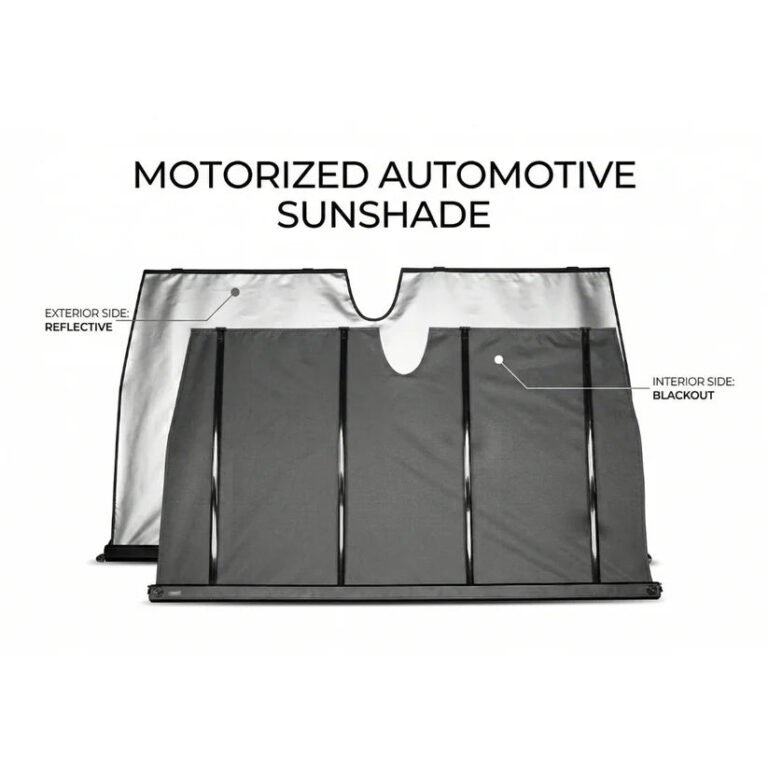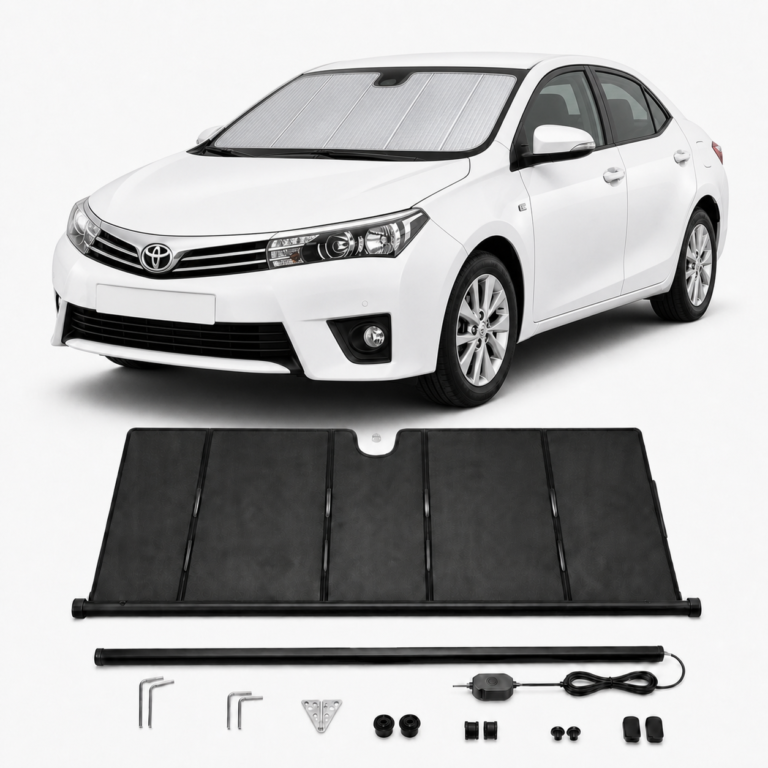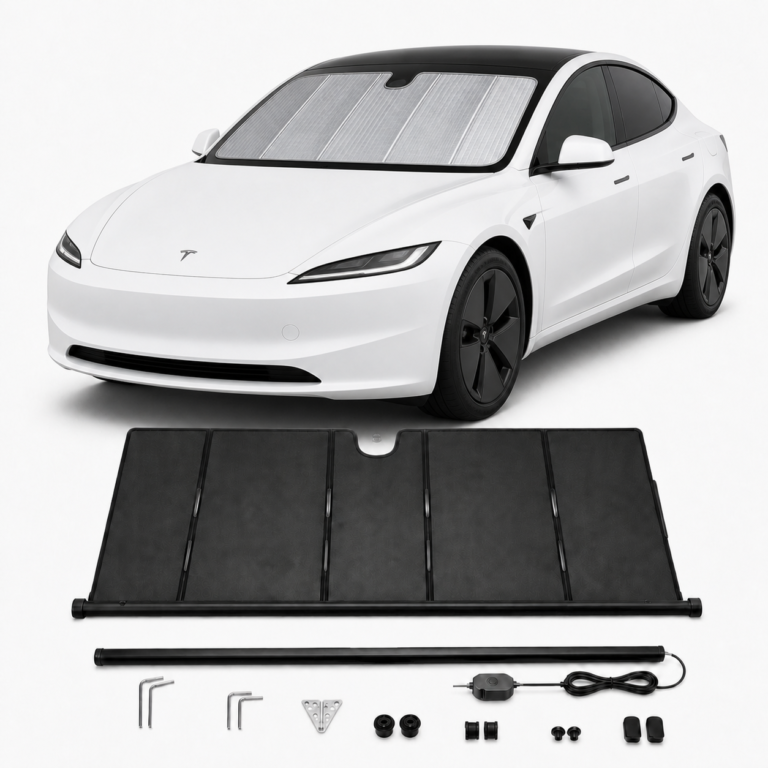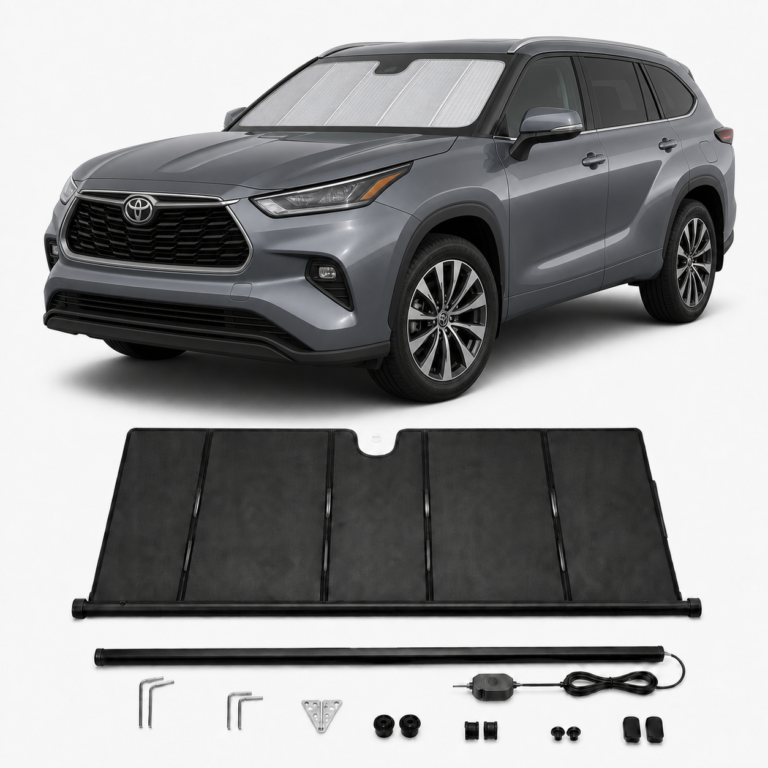
The best car sunshade is the one that fits your exact windshield, covers it fully, and is easy enough that you actually use it every day. A shade that folds away in the glove box because it is a hassle to put up protects nothing, no matter how good its material is.
That is the honest starting point for this guide. Below are the criteria that matter, how the three main types compare, and when a one-touch electric shade is worth the extra money — plus when it is not.
What “Best” Actually Means
Most sunshade buying guides rank shades by material alone. Material matters, but it is not the first thing to get right. Fit comes first, because a shade that leaves gaps around the edges lets sunlight straight past it, and a shade that does not match your windshield’s shape will not stay in place.
So judge any shade in this order:
- Does it fit your exact car — year, make, model, and trim?
- Does it cover the full windshield, edge to edge?
- Is it easy enough to use every single day?
- Does it block heat and UV well?
- Will it last?
A shade that scores well on all five is the best shade for you. A shade that only scores well on one or two is a compromise, and you should know which compromise you are making.
The 5 Criteria, Explained
1. Fit and coverage
Windshields differ by model and year — in shape, slope, and size. A shade cut for your specific model covers the glass fully. A shade made in a few generic sizes, or a one-size universal shade, may leave gaps at the corners or along the edges on some cars. Gaps matter because that is exactly where sunlight gets through.
Before buying any shade, check that it is listed for your exact model and year on the product page. “Close enough” is not a fit.
2. Heat and UV blocking
A sunshade’s job is to keep sunlight — and the heat that comes with it — out of the cabin while the car is parked. How well it does that depends on its material and how completely it covers the glass. Be wary of shades that make big heat-blocking promises without explaining the material, and remember that coverage and fit affect real-world performance just as much as the material itself. A fully covering shade made of ordinary reflective material will usually beat a poorly fitting shade made of a fancier one.
3. Daily ease of use
This is the criterion most buyers underestimate. A sunshade only works when it is up. If putting it up takes unfolding, positioning, tucking it into place, and then reversing the whole routine when you leave — every day, in a hot parking lot — many people stop using it. That is the single biggest reason shades end up unused.
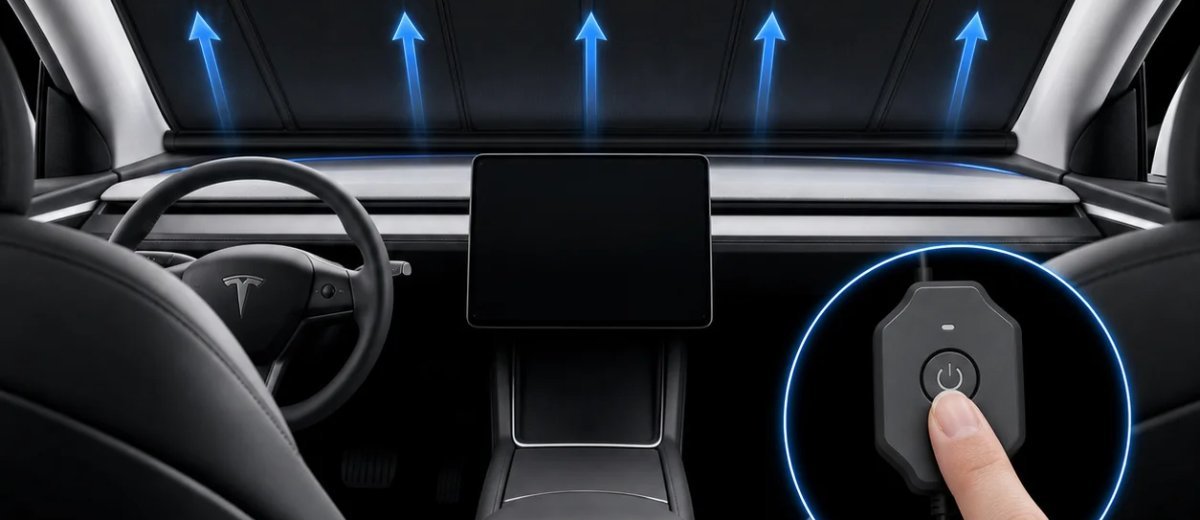
One-touch electric shades exist to solve exactly this problem: you press a button and the shade opens or closes on its own. If you park in the sun daily, ease of use is not a luxury feature. It is the difference between a shade you use and a shade you own.
4. Durability
A shade lives in a harsh environment: direct sun, high cabin temperatures, and daily handling. Things to look for are a sturdy frame, a mechanism that does not feel flimsy, and a warranty that covers the moving parts. Folding shades wear mainly at their folds and edges over time. Electric shades add a motor and mechanism, so the warranty on those parts matters more — check what it covers before you buy.
5. Storage while driving
A sunshade must be fully out of the way while you drive. Folding shades fold down and usually store in a bag or against a seat. Electric shades retract into their mounted housing. Either way, confirm how and where the shade stores when it is not in use, and that it does not block your view or interfere with driving.
The Three Types Compared
| One-touch electric (custom-fit) | Folding (custom-fit) | Universal | |
|---|---|---|---|
| Operation | Press a button; opens and closes automatically | Unfold, position, and tuck by hand each time | Unfold and position by hand each time |
| Fit | Cut for a specific model | Cut for a specific model | One size for many cars; may leave gaps on some windshields |
| Coverage | Full windshield, model-matched | Full windshield, model-matched | Varies by car; gaps possible |
| Daily effort | Lowest — one touch | Moderate — a short routine each time | Moderate — same routine, sometimes with adjusting |
| Durability | Motor and mechanism are the wear points; check the warranty | Folds and edges wear with heavy daily use | Varies; thinner materials wear faster |
| Price | Highest of the three | Mid-range | Lowest |
The table makes the trade-off clear: electric wins on daily effort, folding wins on price for the same fit, and universal wins on price alone while giving up fit.
When a One-Touch Electric Shade Is Worth It
An electric shade is worth the premium when:
- You park in the sun nearly every day, so the shade goes up and down constantly.
- You have stopped using a folding shade in the past because the routine got old.
- You want full coverage without thinking about it — one press, done.
- You keep your car for years, so the per-day cost of the upgrade is small.
It is harder to justify when you rarely park in direct sun, only need a shade a few times a year, or are buying for a car you will sell soon. In those cases a good folding shade is the smarter buy.
Honest Budget Alternatives
If an electric shade is more than you want to spend, you are not stuck with a bad option:
- A custom-fit folding shade is the best budget alternative. You keep the full, model-matched coverage and give up only the automatic operation.
- A universal shade is the cheapest option, but check the fit carefully. On some windshields it works fine; on others it leaves gaps or will not stay put. Buy it only if you can confirm it fits your car, and expect to adjust it.
- A windshield visor strip or tint is not a substitute for a full shade. It helps with glare while driving but does little for a parked car in full sun.
Spending less is fine. Spending less on a shade that does not fit, or that you will not use, is not a saving.
How to Pick for Your Car
- Confirm your exact model and year on the product page before ordering. Trim and generation can change windshield shape.
- Check the coverage claim. “Custom-fit” should mean cut for your model, not just offered in a few sizes.
- Think about your daily routine honestly. If you already know you skip fiddly routines, weight ease of use heavily.
- Check the practical details. How is it powered? How does it install? How does it store while driving? What does the warranty cover?
- Check delivery and returns before you buy. Know how long shipping takes and what a return would cost you, so there are no surprises.
What KALDOV Offers
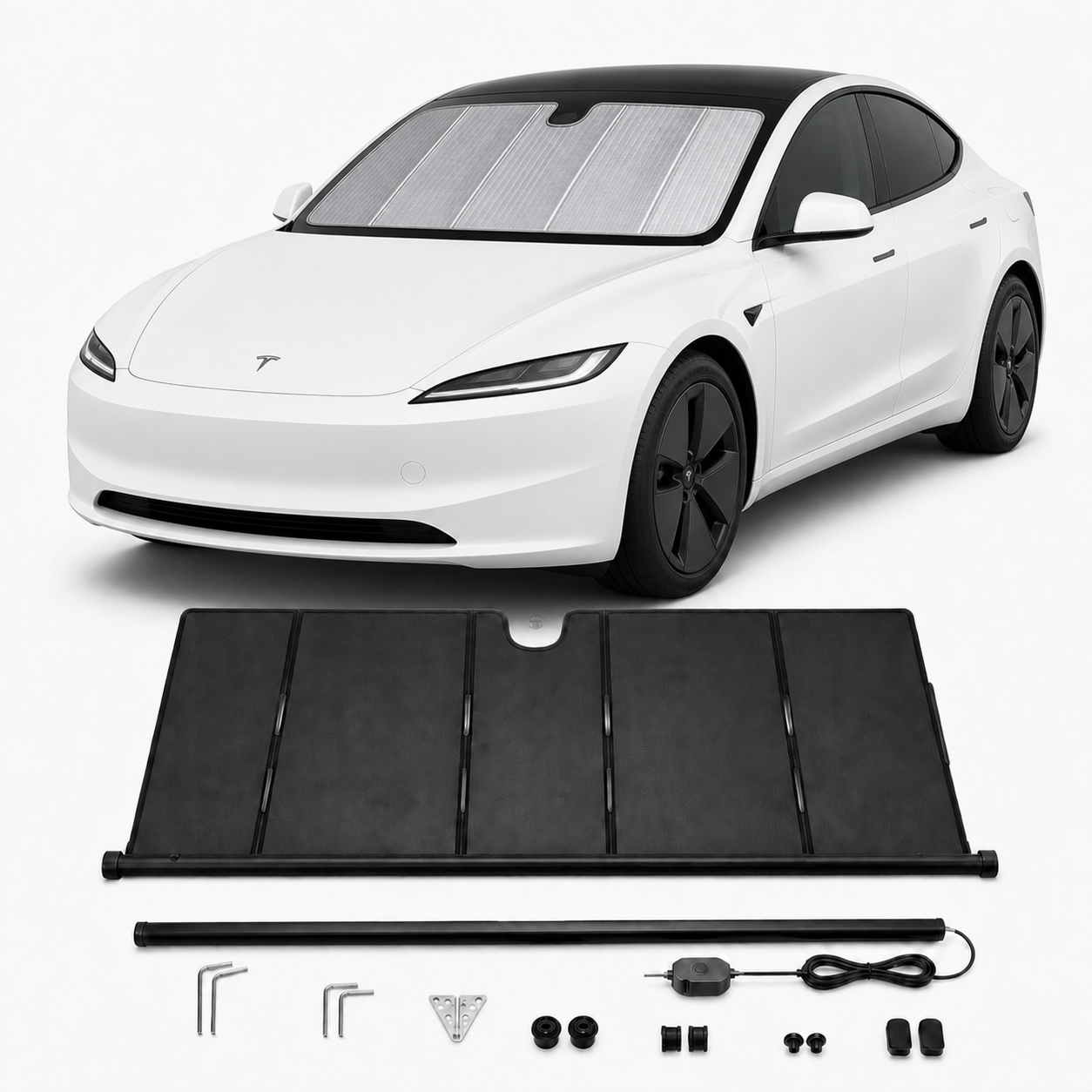
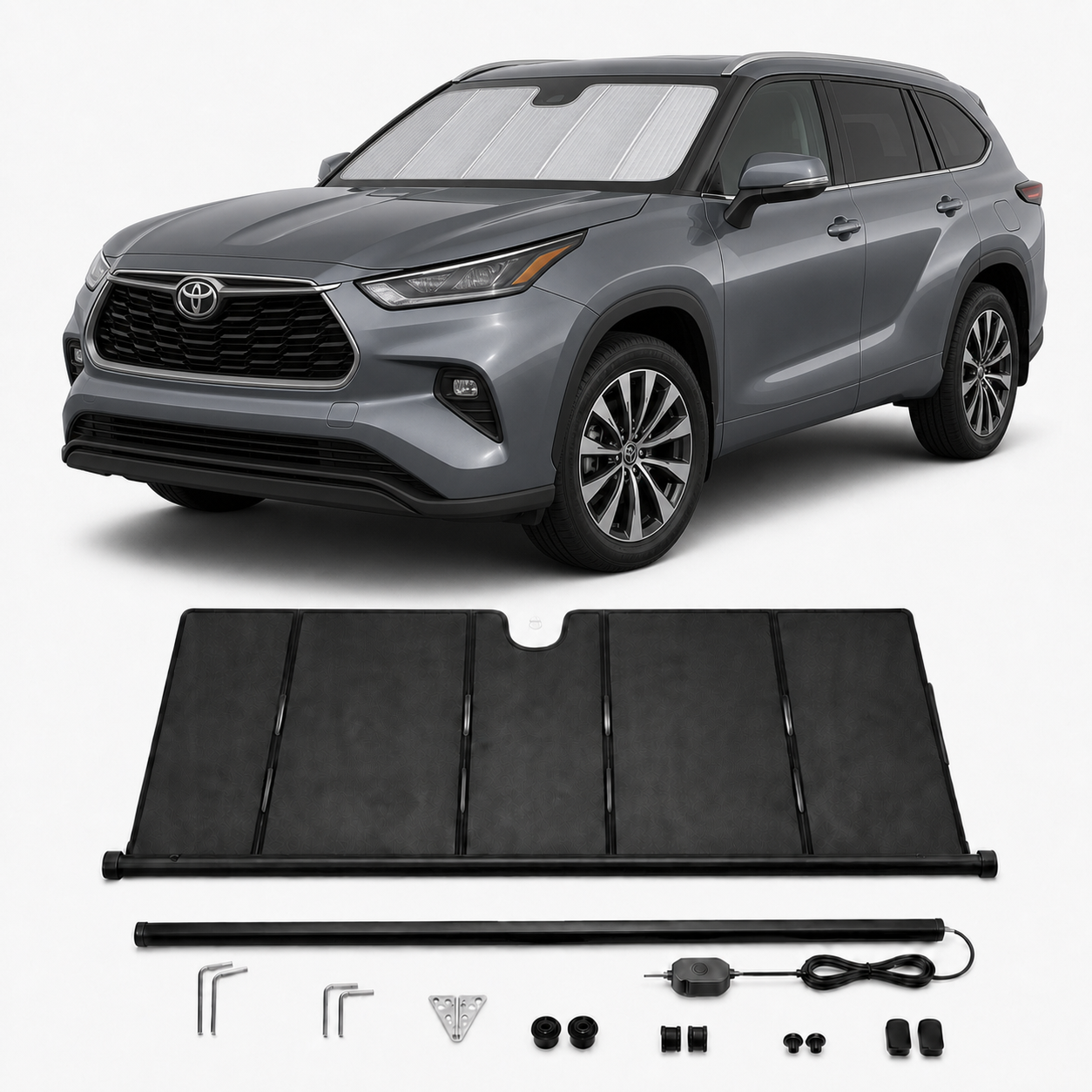
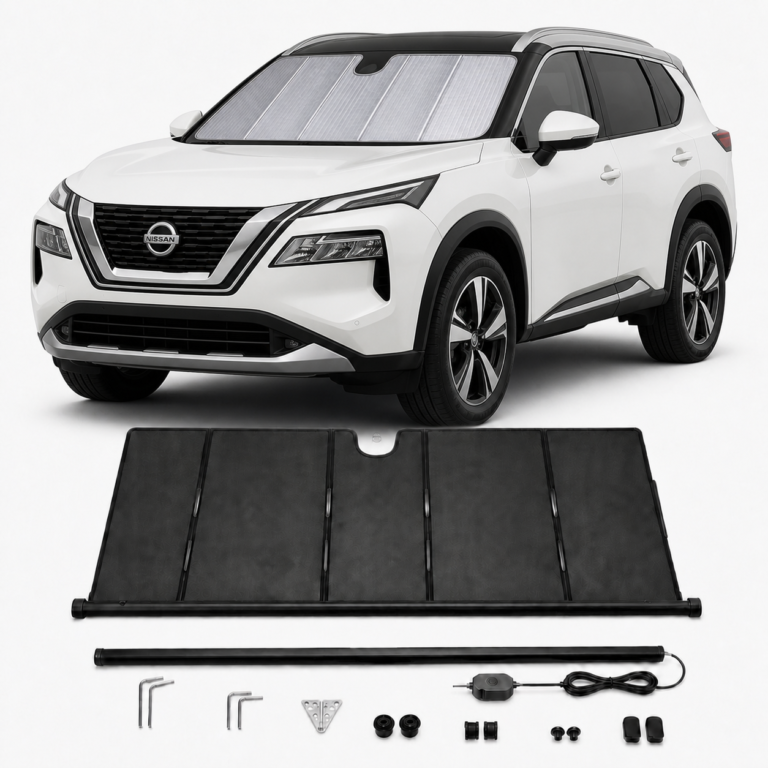
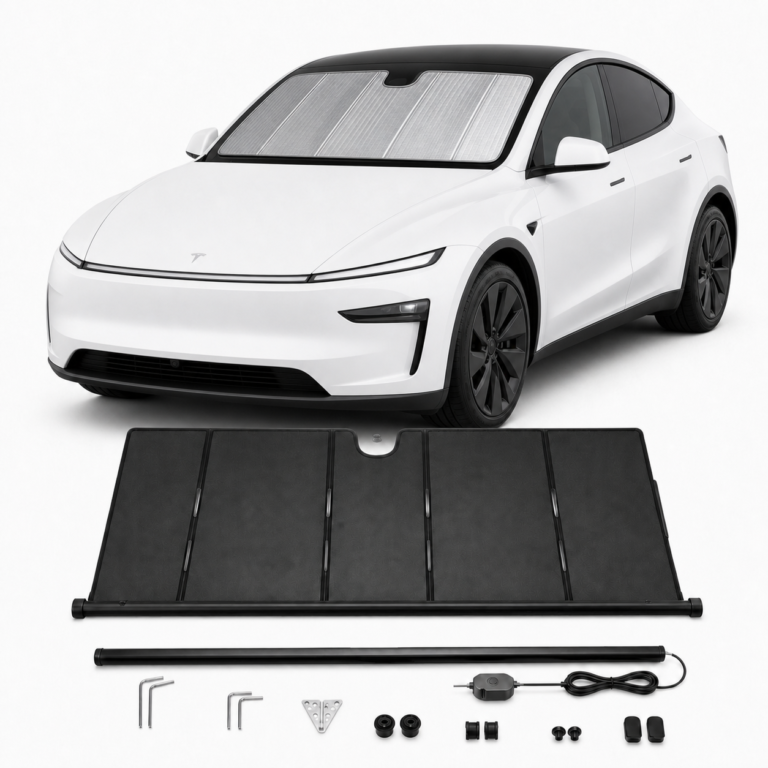
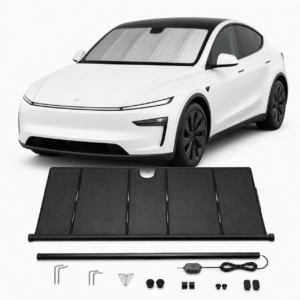
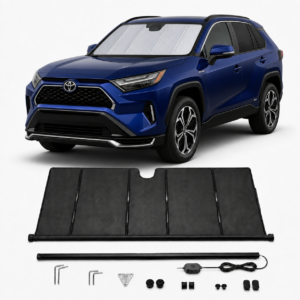
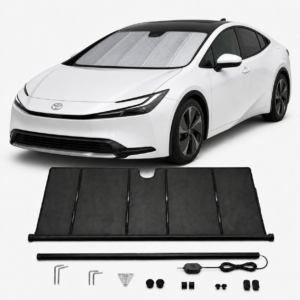
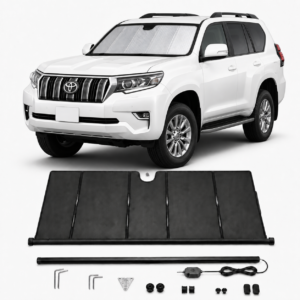
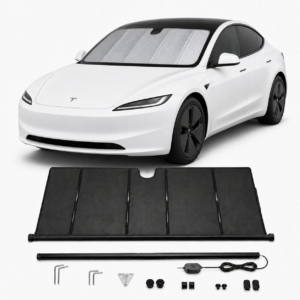
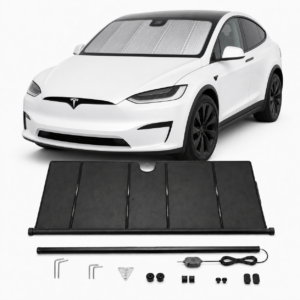
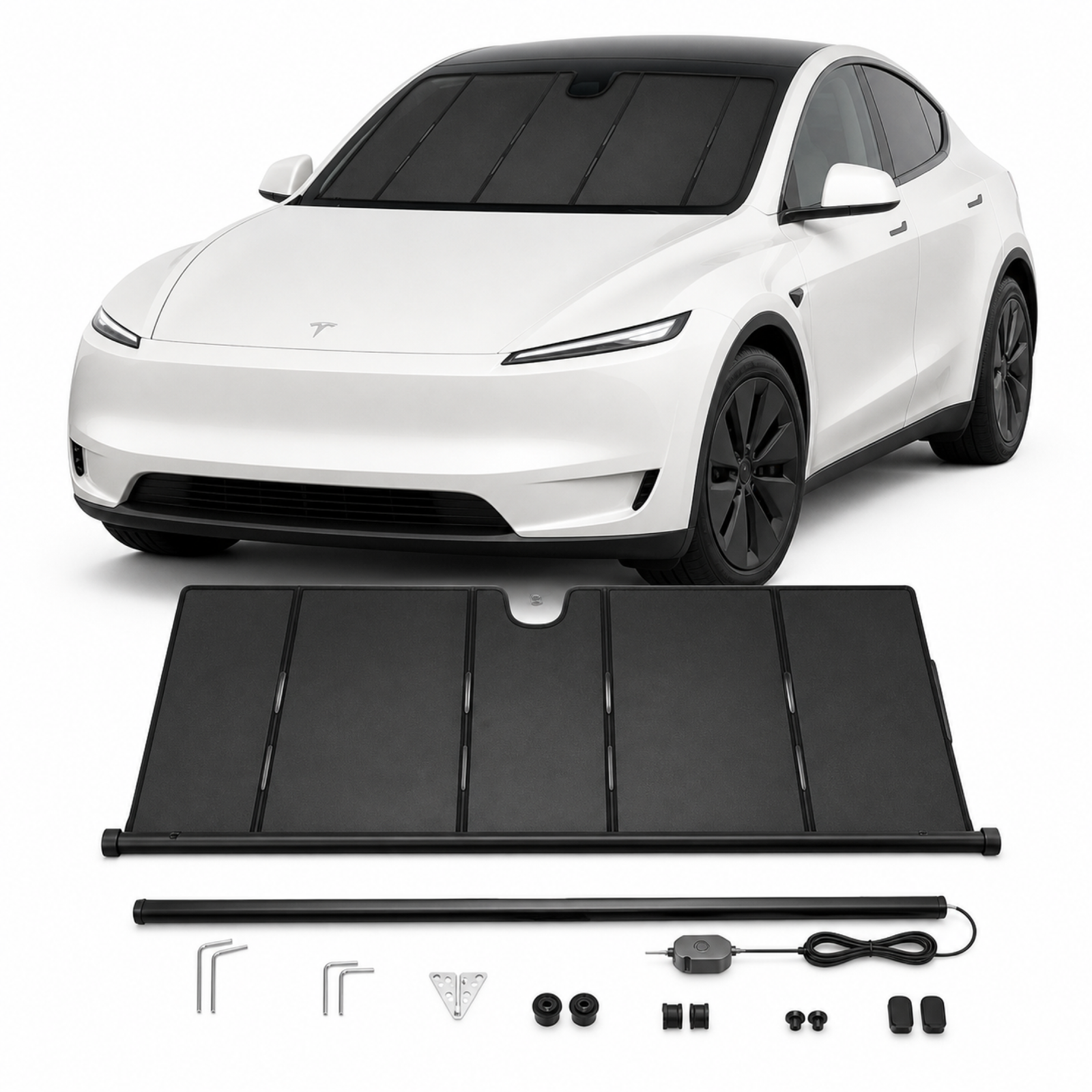
KALDOV makes custom-fit, one-touch electric windshield sunshades for the US market. The shades are powered through the car’s OBD port (12V–16V), use a quiet 12W motor and an aluminum frame, weigh about 1.7 kg, and install in about 5 minutes with no tools.
Prices include free shipping, delivery takes 7–15 days, the motor and mechanism carry a 1-year warranty, and returns are accepted within 30 days of delivery, with return shipping to the China warehouse paid by the buyer.
Model prices: the Tesla Model Y version costs $314, the Tesla Model 3 version costs $314, the Toyota Highlander version costs $291, the Ford Mustang Mach-E version costs $324, and the Nissan Rogue version costs $349.
FAQ
What size sunshade do I need?
The one made for your exact year, make, model, and trim. Windshield shapes vary, and a shade that is not cut for your car will leave gaps or not stay in place. Always check the product page for your specific car before ordering.
Does an electric sunshade drain the car battery?
The shade is powered through the OBD port (12V–16V) and the motor runs when you press the button to open or close it — it is not running continuously. As with any accessory, follow the installation instructions for your car.
Will it fit around my rearview mirror and sensors?
Because KALDOV shades are cut per model, they are shaped for that car’s windshield layout. Still, check the product page for your model and confirm fitment details before ordering, especially if your car has a large sensor housing behind the mirror.
How long does installation take?
About 5 minutes, with no tools required.
What if I want to return it?
Returns are accepted within 30 days of delivery. Return shipping to the China warehouse is paid by the buyer, so factor that in when deciding.
Is the most expensive sunshade always the best?
No. The best shade is the one that fits your car fully and that you will actually use every day. An electric shade is the easiest to use, but a well-fitting folding shade you use daily beats an electric shade you never install.
The Bottom Line
Start with fit, then coverage, then ease of use. If you park in the sun every day and want a shade you will never skip, a custom-fit one-touch electric shade is the easiest option to live with. If your budget is tight or you only need a shade occasionally, a custom-fit folding shade gives you the same coverage for less money. Either way, buy for your exact car — and buy the shade you will actually put up.